Science Curriculum - The Timeline of Life
Montessori's Timeline of Life captivates elementary students, fostering wonder and understanding of Earth's history and life's complexity.
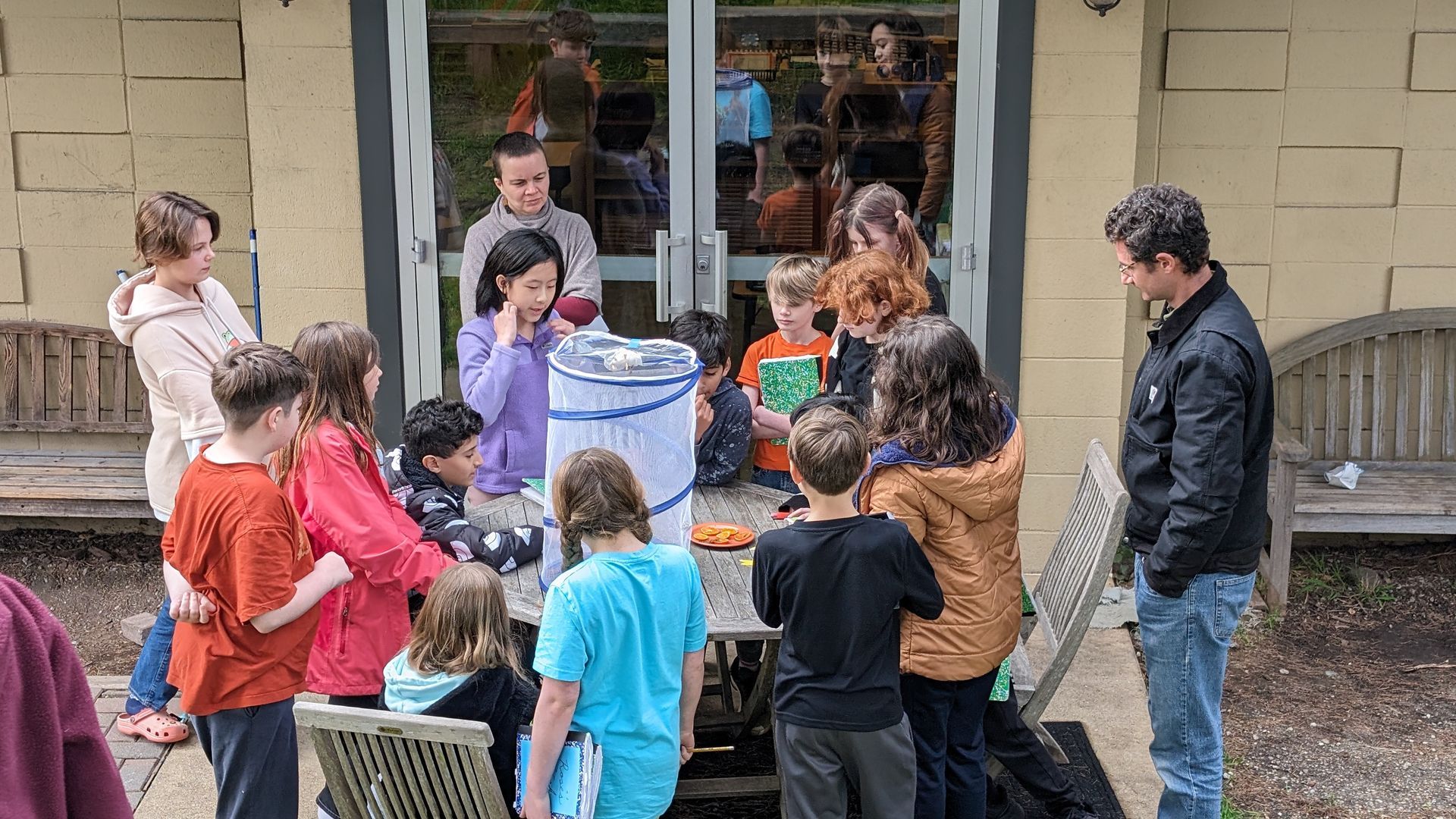
Nothing quite captures the imagination of elementary-aged children more than the Timeline of Life. Developmentally our 6 to 12 year olds can start creating temporal order, and timelines are a perfect way for them to visually explore and understand the passage of time.
We share timelines as a key part of the Montessori Cosmic Education curriculum, through which we provide a holistic understanding of the universe, Earth's history, and humanity's place within it. The Timeline of Life is the first in a series of prepared timelines in Montessori elementary classrooms and it provides a series of engaging activities designed to help children grasp the vastness of time, the interdependency of all living things, and how human life is a continuation of much that has come before.
Presentation & Introduction
When we first present the Timeline of Life, we often share it in panoramic form, unrolling the timeline as we tell an overarching story. The main photo for this blog post is our Lower Elementary class unrolling the Black Line, which is used to represent the timeline of life. But one of the gifts of the timeline is that it can be used in multiple ways! We can also focus on one panel of the timeline and explore the pictures from a particular period or epoch, provide information about one specific organism across the timeline (e.g. the development and decline of the trilobites), or even just explore the various symbols, terms, and conventions used in the timeline.
Our presentation of the Timeline of Life can be a combination of a historical overview of the progression of life through the ages, an examination of the influence that life has had on the non-living parts of the world, and a corresponding examination of the influence that the non-living parts of the world have had on living organisms.
These presentations provide the children with the opportunity to sequence details of the story of life on Earth while also offering almost unlimited opportunities for more in-depth research throughout their years in the Montessori elementary classroom.
Highlights & Possibilities
The timeline visually illustrates several major milestones of life on Earth, including:
● how lifeforms arose in the oceans
● the appearance of multi-cellular organisms
● the evolution of creatures with a spinal column and backbone
● how some plants and animals began to move from water to land
● the appearance of land-based plants with roots and stems
● the emergence of flowering plants
● how birds and mammals were better able to deal with variations in the temperature around them
● how humans, with neither fur nor feathers, sharp teeth or claws, could use their hands, heads, and hearts to adapt to their environment
After presenting Timeline of Life basics, we return to the material repeatedly to explore more details and offer new avenues of investigation. We might introduce more of the creatures on the timeline, the names of the eras and their etymology, the red lines showing linkages through the timeline, or the visual cues demonstrating the timing of the ice ages. We might explore the rising of mountain ranges, the deposition of salt and coal, the shapes of land masses throughout history, the rise of flowering plants, and creatures (like the horseshoe crab) that appear now as they appeared in those ancient times. The Timeline of Life can inspire children to explore fossils and fossilization, and even embrace aspects of organic chemistry! As children become more sophisticated in their thinking, we present new facets of the timeline.
How the Black Line is used in the classroom
Children also enjoy using a blank timeline to see if they can recreate the Timeline of Life by placing loose pictures held in a folder or container for each era. When all of the loose pictures are correctly placed, the result matches the Timeline of Life. As a result, children often use the blank timeline to test themselves on how much they remember.
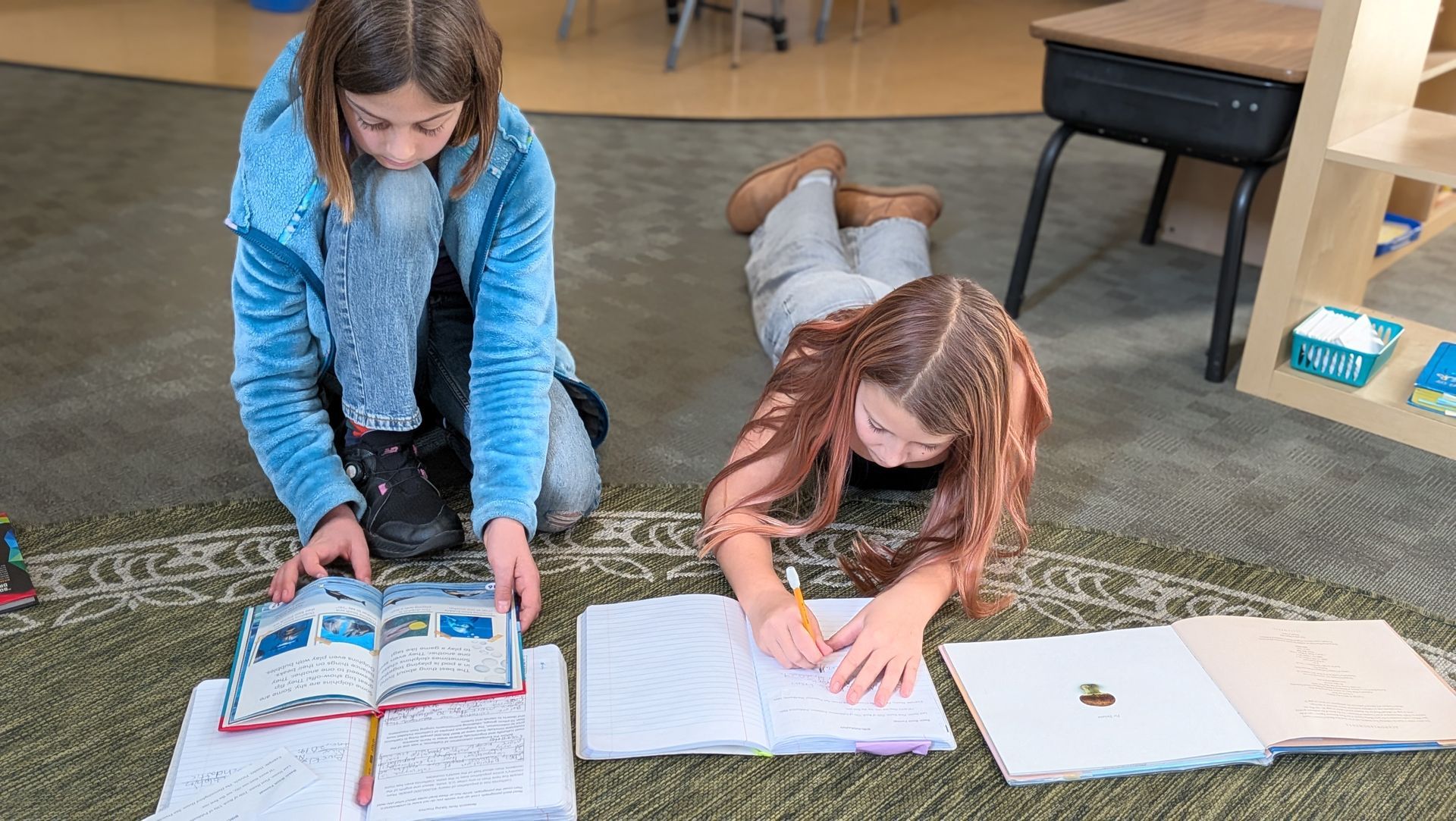
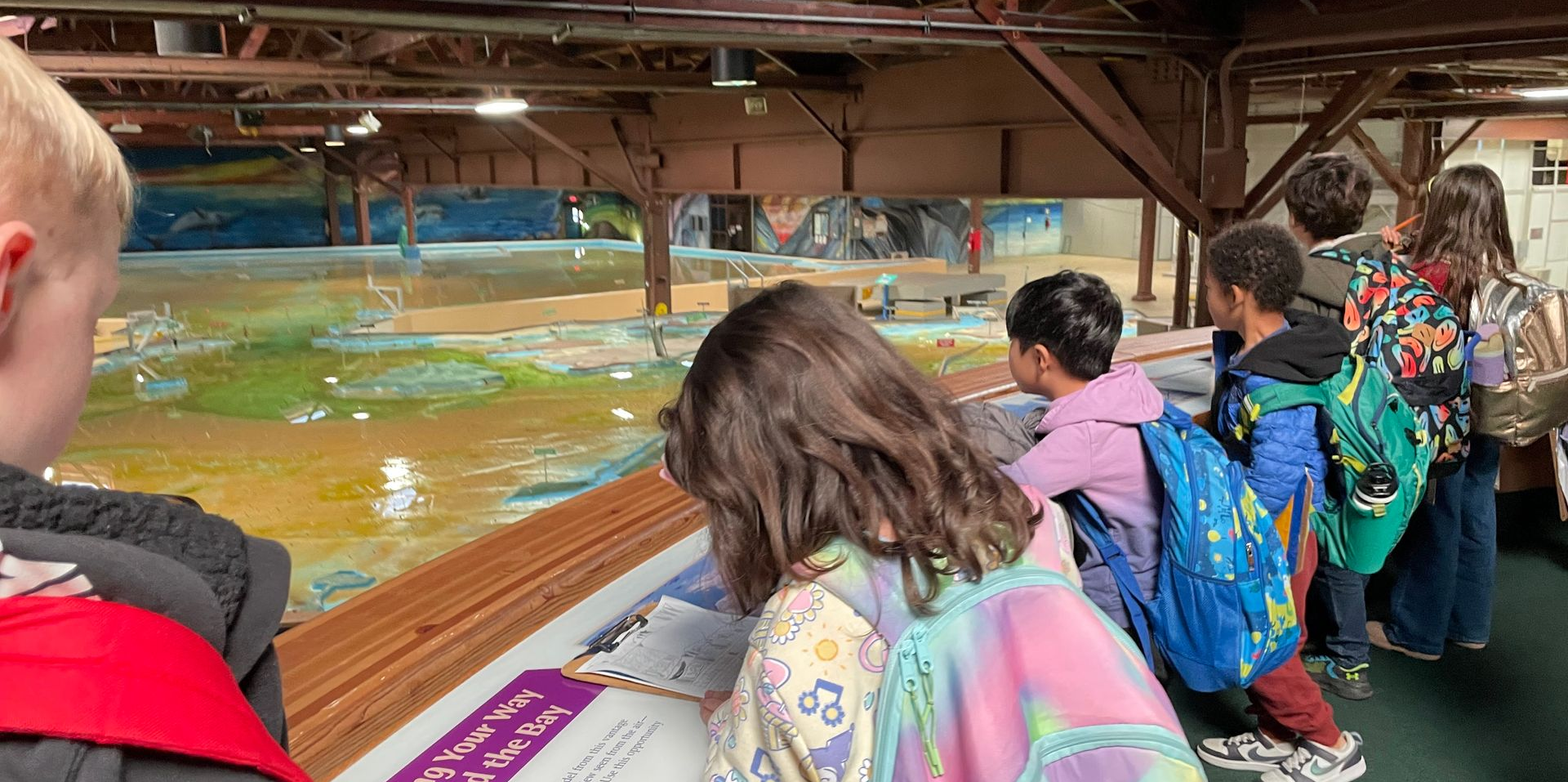
Children are often inspired to set up little Going Out trips to learn more about something on the Timeline of Life or create scale drawings of the massive and minute creatures they learn about from the timeline. Children also love to share their discoveries through drawings, dioramas, models, and booklets.
Awe & Wonder
Above all, the Timeline of Life helps children grasp the wonders of deep time and the complexity of life that surrounds us wherever we look. They are fascinated by how long the earth went with no life to just how long it has taken for life to develop from proto-organisms to complex mammals.
In Montessori elementary classrooms, the Timeline of Life is not merely a subject of study but a source of wonder and inspiration. As they use the timeline, children are immersed in the rich tapestry of life's history and as a result, develop a deep sense of connection to the natural world and a profound respect for all living beings.
We invite you to schedule a tour to see how children embark on a lifelong journey of learning and discovery through hands-on experiences with materials such as the Timeline of Life!