Montessori Grammar Symbols: Making Language Visible and Alive
Montessori grammar symbols help children see how language works.
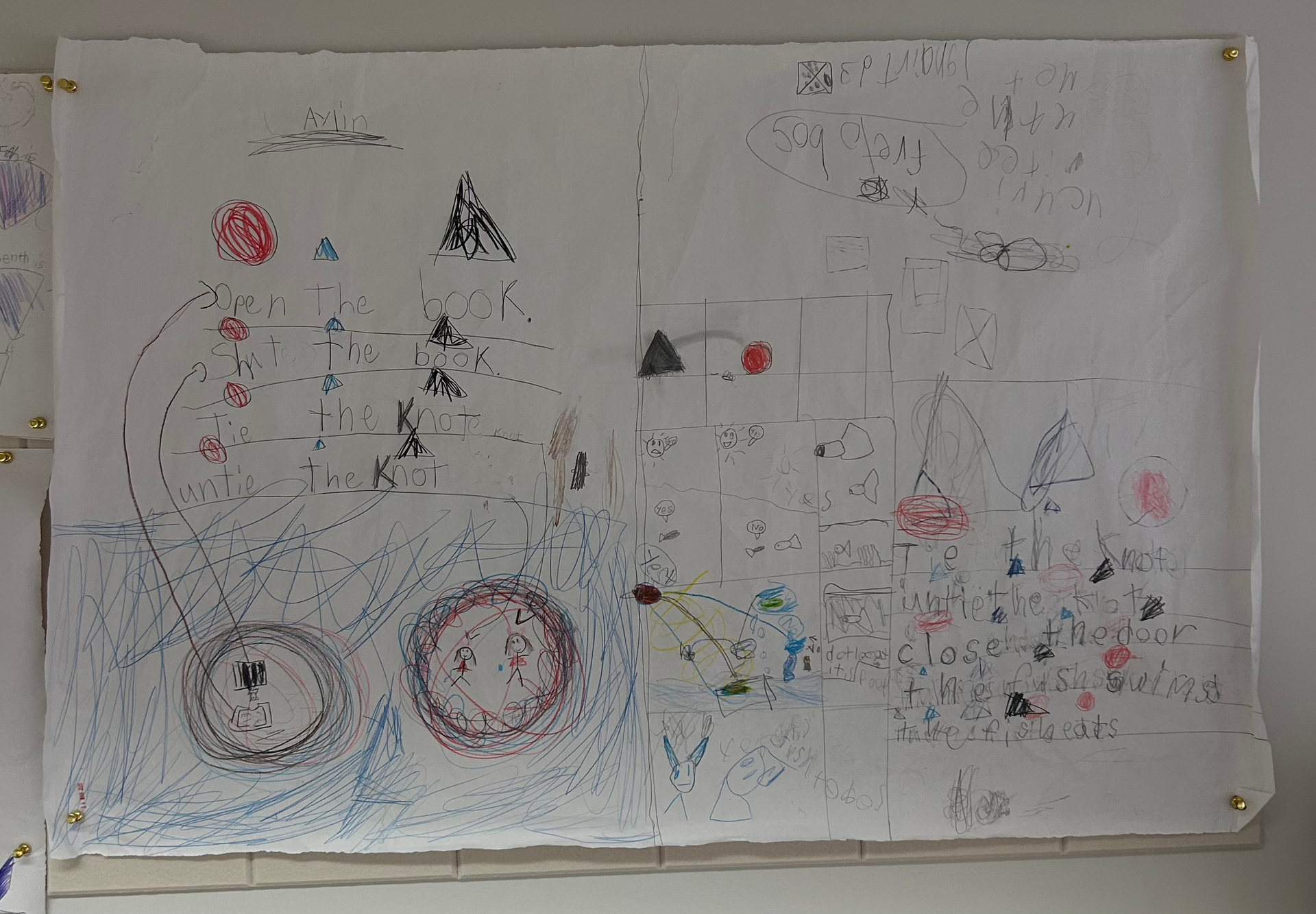
If you’ve ever noticed small, colorful shapes placed above words in a Montessori classroom, you may have wondered what they mean, or why grammar looks so different from what many of us remember from school!
Those colorful shapes are Montessori grammar symbols, reflecting a deeply intentional approach to helping children understand language through function, history, and experience.
Words Are Defined by the Work They Do
In Montessori, grammar begins with the simple understanding that words are classified by the job they perform in a sentence.
- Some words name people, places, or things.
- Some express action.
- Some describe.
- Some connect.
This concept of parts of speech exists in all languages, though the number and categories vary. Montessori embraces this universal truth and introduces it in a way that aligns with children’s natural development.
Language Is Experienced Before It Is Named
In our youngest classrooms (classically ages 2.5 to 6, in our school, ages 4-6), children encounter parts of speech through activity, not terminology.
When children explore words that express action, they get to act out simple commands like run, jump, skip. They respond with their bodies, so they can experience the language long before they analyze it.
As children develop their reading skills, we begin to introduce the functions of seven parts of speech:
- article
- adjective
- noun
- verb
- adverb
- preposition
- conjunction
We save two parts of speech, pronouns and interjections, for the elementary years because both require a higher level of abstraction. To understand a pronoun, for example, a child must first have a strong, concrete sense of the noun. Interjections express internal emotional states, which also require more mature abstract thinking.
Young children learn what words do, not what they are called. Questions we explore sound like:
- “Which word tells us what kind?”
- “Which word shows the action?”
- “Which word connects these ideas?”
We introduce the formal names of nouns, verbs, and so on later in the elementary years, when children are developmentally ready to categorize and label abstract ideas.
Enter the Montessori Grammar Symbols
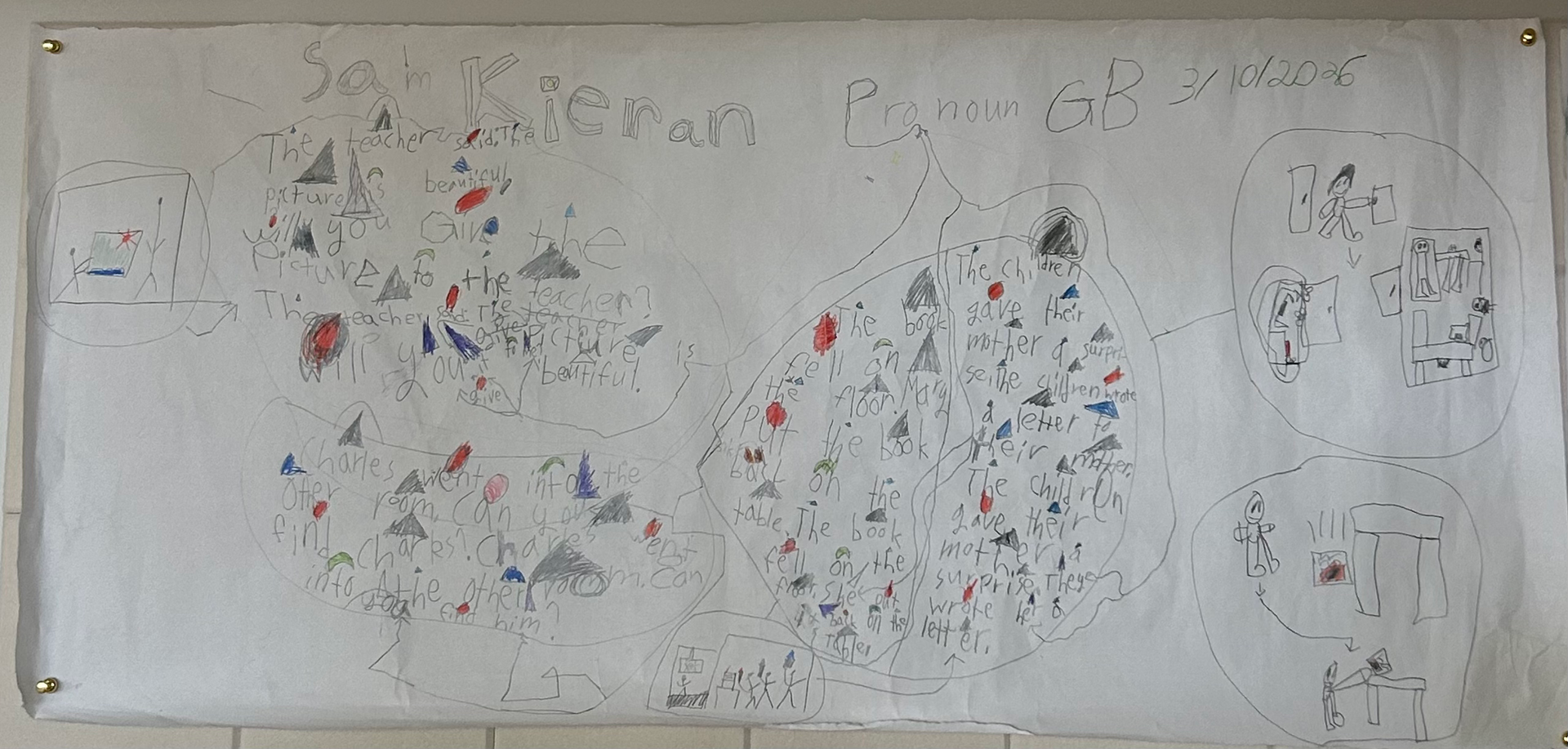
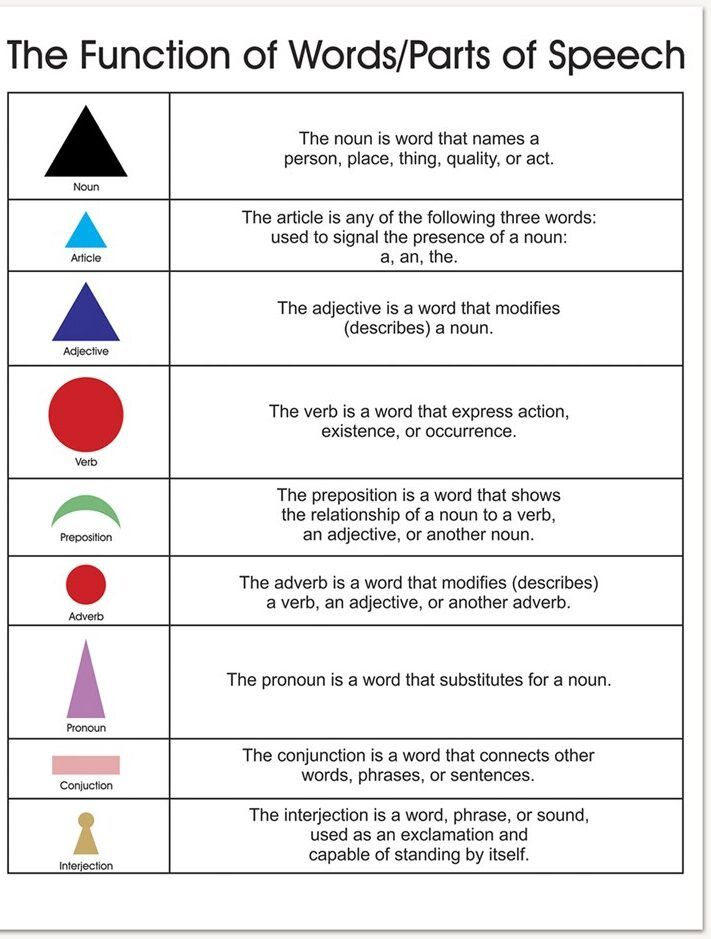
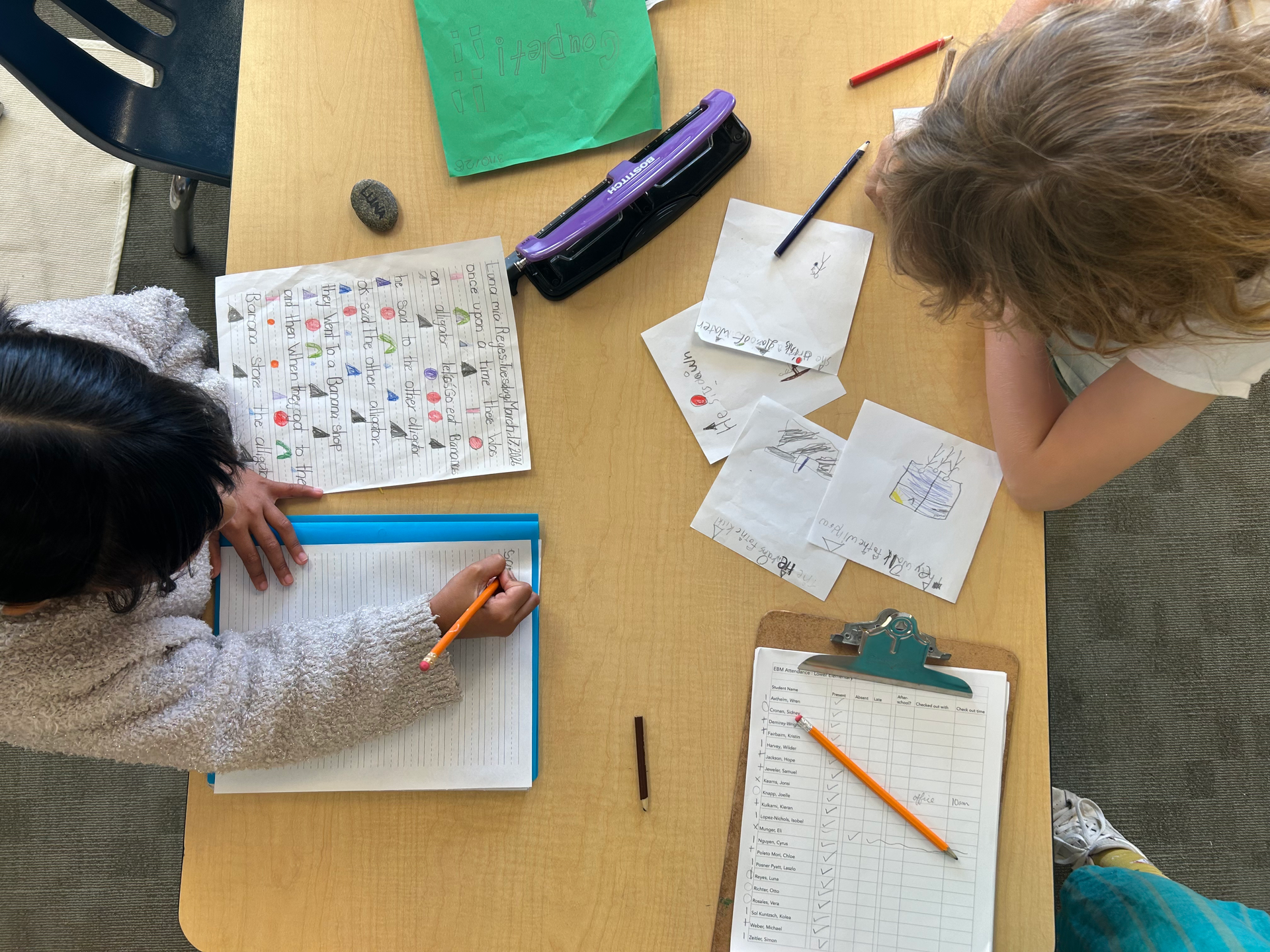
Alongside this functional work, children are introduced to Montessori grammar symbols: geometric shapes that represent each part of speech.
These symbols are not arbitrary decorations. They are rooted in history, symbolism, and meaning.
Children may arrive in the elementary having worked extensively with the functions of nouns and verbs and having used the symbols, even if they have never heard the words “noun” or “verb” themselves.
This is intentional.
The Noun and the Verb: History Made Visible
Linguists believe that early human language likely began with nouns: names for people, objects, and things in the environment. Later, names were given to actions.
Dr. Montessori embedded this history directly into the symbols.
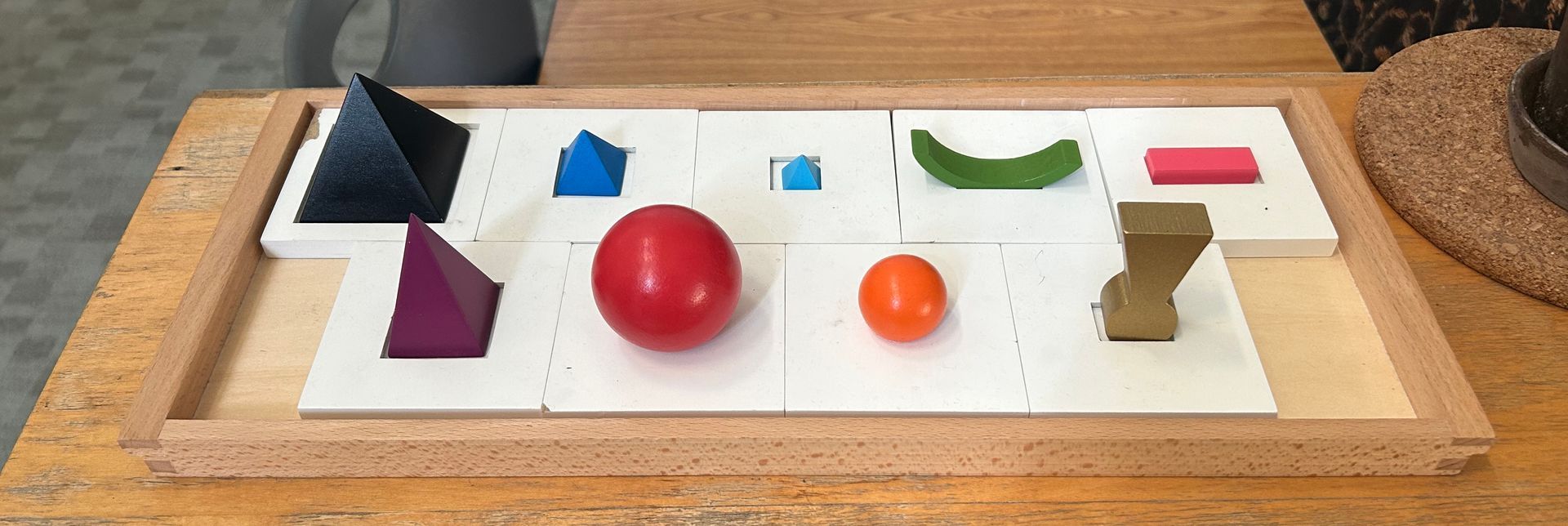
The noun is represented by a black square-based pyramid.
- The black symbolizes the darkness of ancient time.
- Some interpret it as representing coal, something very old and foundational.
- When working on paper, children use one face of the pyramid: a black equilateral triangle.
The verb is represented by a red sphere.
- Red symbolizes energy.
- The sphere represents the sun and its life-giving force.
- The verb brings energy and movement to the noun. That is why it is symbolized by an easily-moveable sphere.
- On paper, this becomes a red circle.
Through these symbols, children get to imagine and explore the story of language itself.
Discovering the Living Nature of Nouns ▲
Children are naturally curious about names, and Montessori grammar invites that curiosity. As they work with nouns, children often explore questions like:
Why do things have the names they do?- What do names mean?
- How are new names created?
They may research plant and animal names, country and place names, and first and last names of people. They also discover that language is alive and constantly changing. New nouns are added all the time. Some words that their grandparents used are no longer common. Other words shift in meaning over generations.
This exploration helps children see language not as fixed rules, but as a human creation shaped by time, culture, and need.
Making the Abstract Concrete
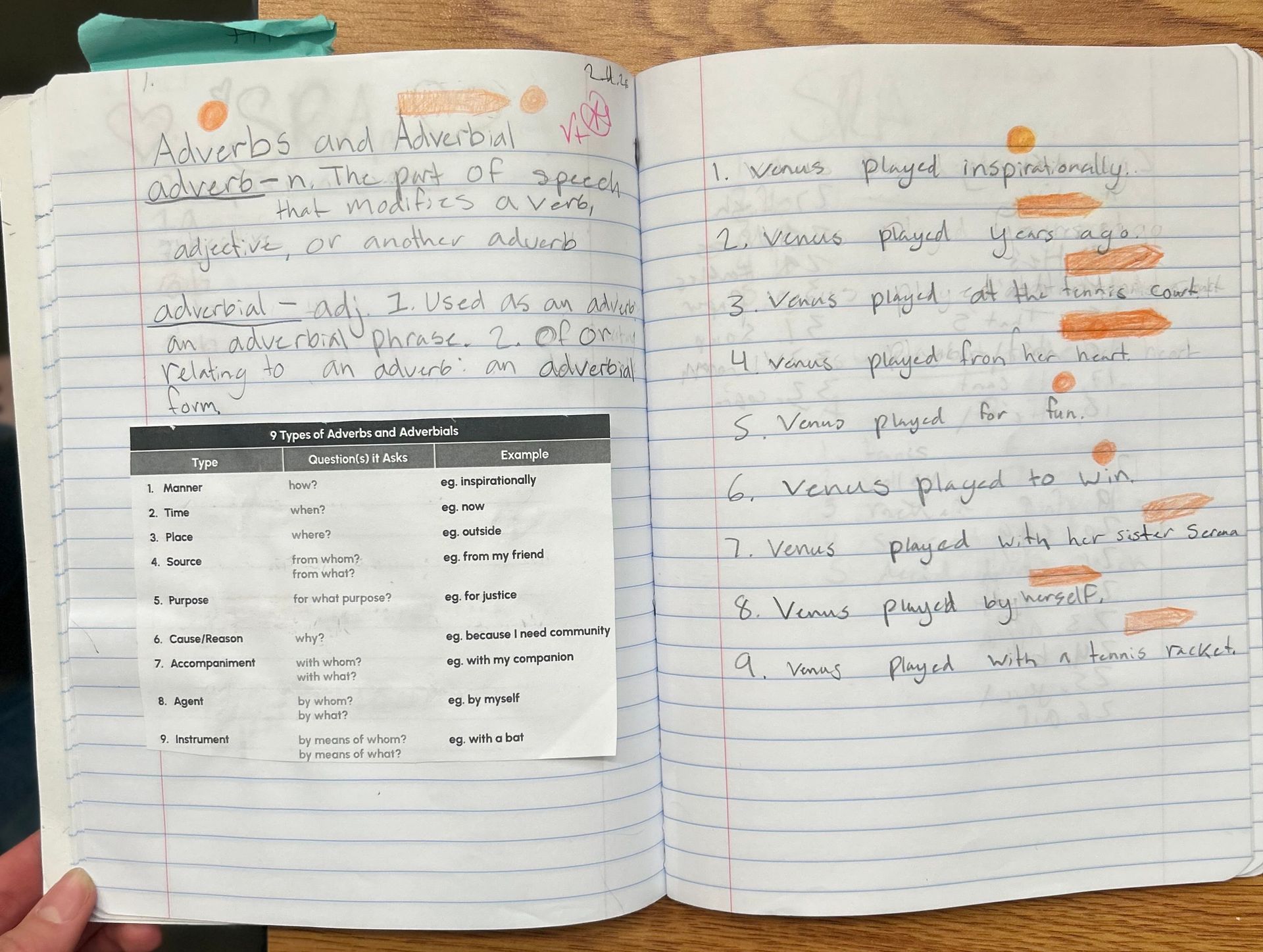
The grammar symbols allow children to:
- See patterns in sentence structure
- Manipulate language physically
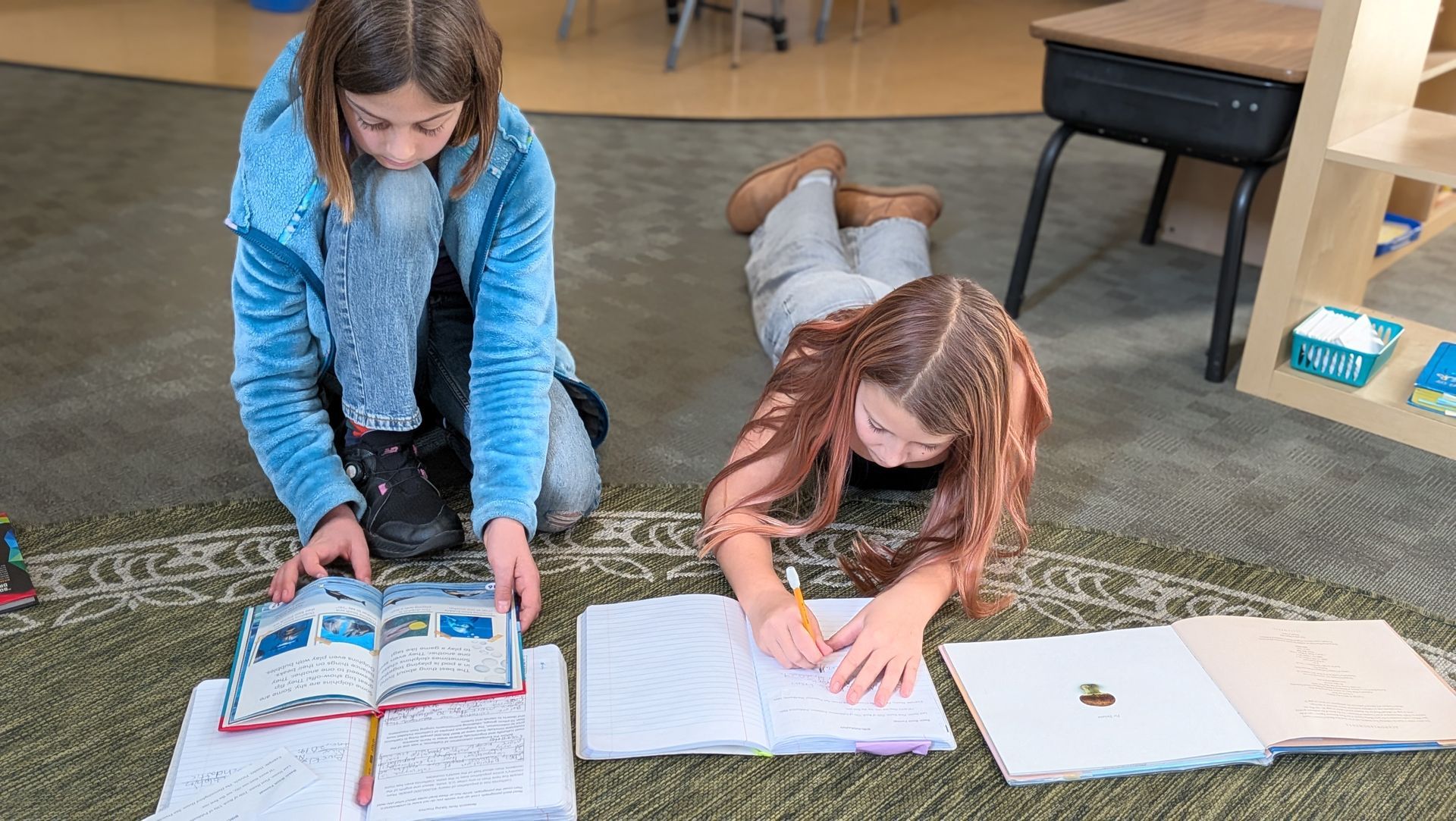
- Analyze their own writing
- Build sentences and meaning intentionally
Sometimes children create symbol patterns first and then find words to match them. This shows deep structural understanding. They are thinking about how language works, not just what it says.
And grammar work is often joyful. We invite games, stories, and playful discoveries along the way. Even the symbols themselves have stories: the conjunction was originally designed as a chain, but it proved too difficult to make from paper!
By the time children move into Elementary, they have:
- Experienced the functions of the major parts of speech
- Worked extensively with grammar symbols
- Developed an intuitive understanding of sentence structure
This foundation allows Elementary grammar to unfold naturally and move from concrete experience into abstraction, analysis, and increasingly sophisticated writing.
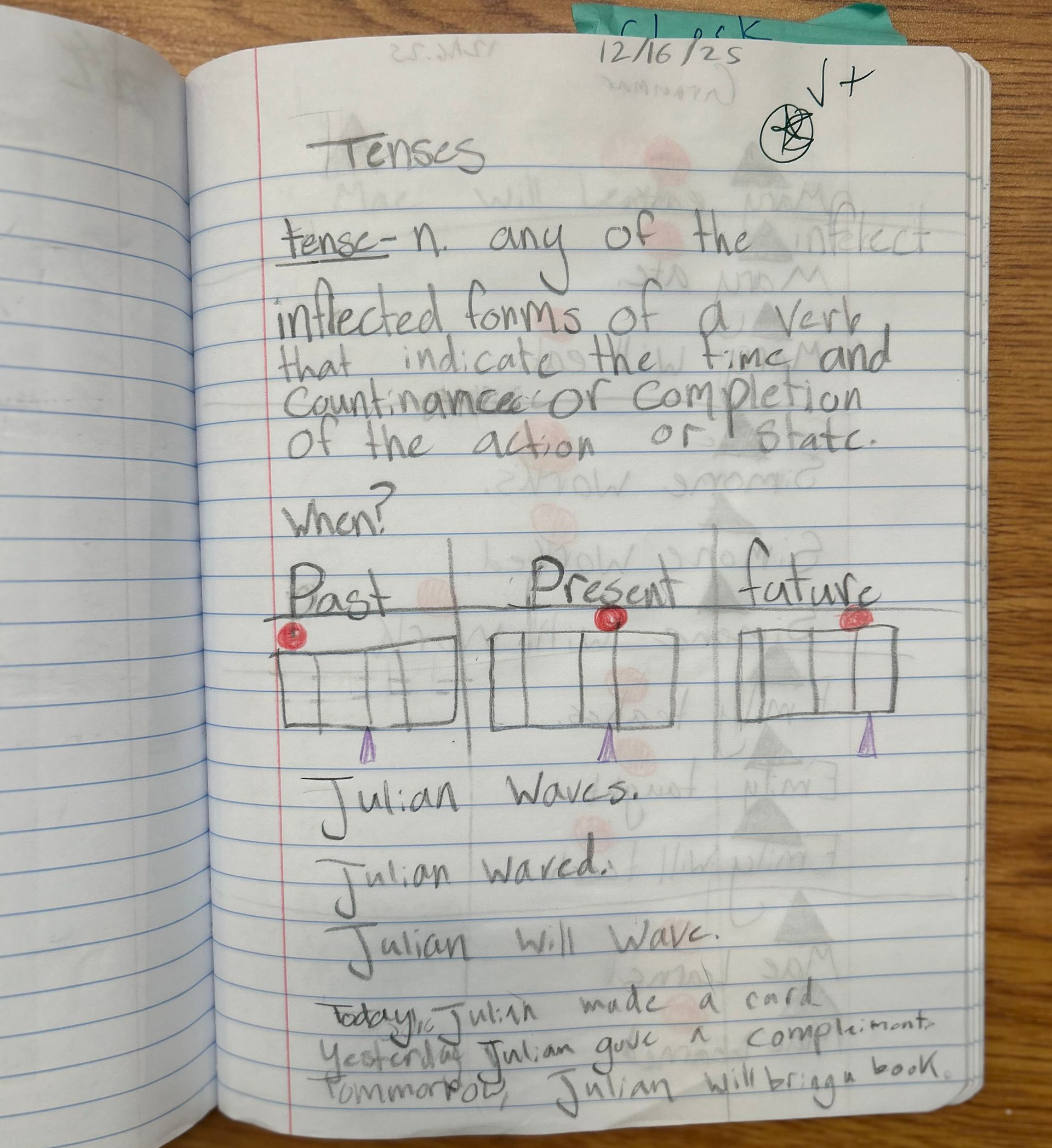
Montessori uses symbols because they:
- Make invisible patterns visible
- Support abstract thinking through manipulation
- Encourage independence and self-analysis
- Invite curiosity rather than rote memorization
In Montessori, grammar isn’t about labeling for its own sake. It’s about helping children understand the logic, beauty, and living nature of language, and it gives them tools to express themselves with clarity and confidence. These deep understandings can be applied to future language learning as well!
That’s what those small, colorful shapes are really doing. Come see for yourself sometime!