The Secret to Summer Math Retention
Simple games that make learning feel like anything but homework
Written by EBM's Upper Elementary Teacher, Emily Howard
When kids return to school in the fall having forgotten all the math they learned last year, they feel so defeated. Kids who keep their math brains alive over the summer can pick math back up so much more quickly. They enjoy math more, have more confidence, and get to new, engaging learning more quickly.
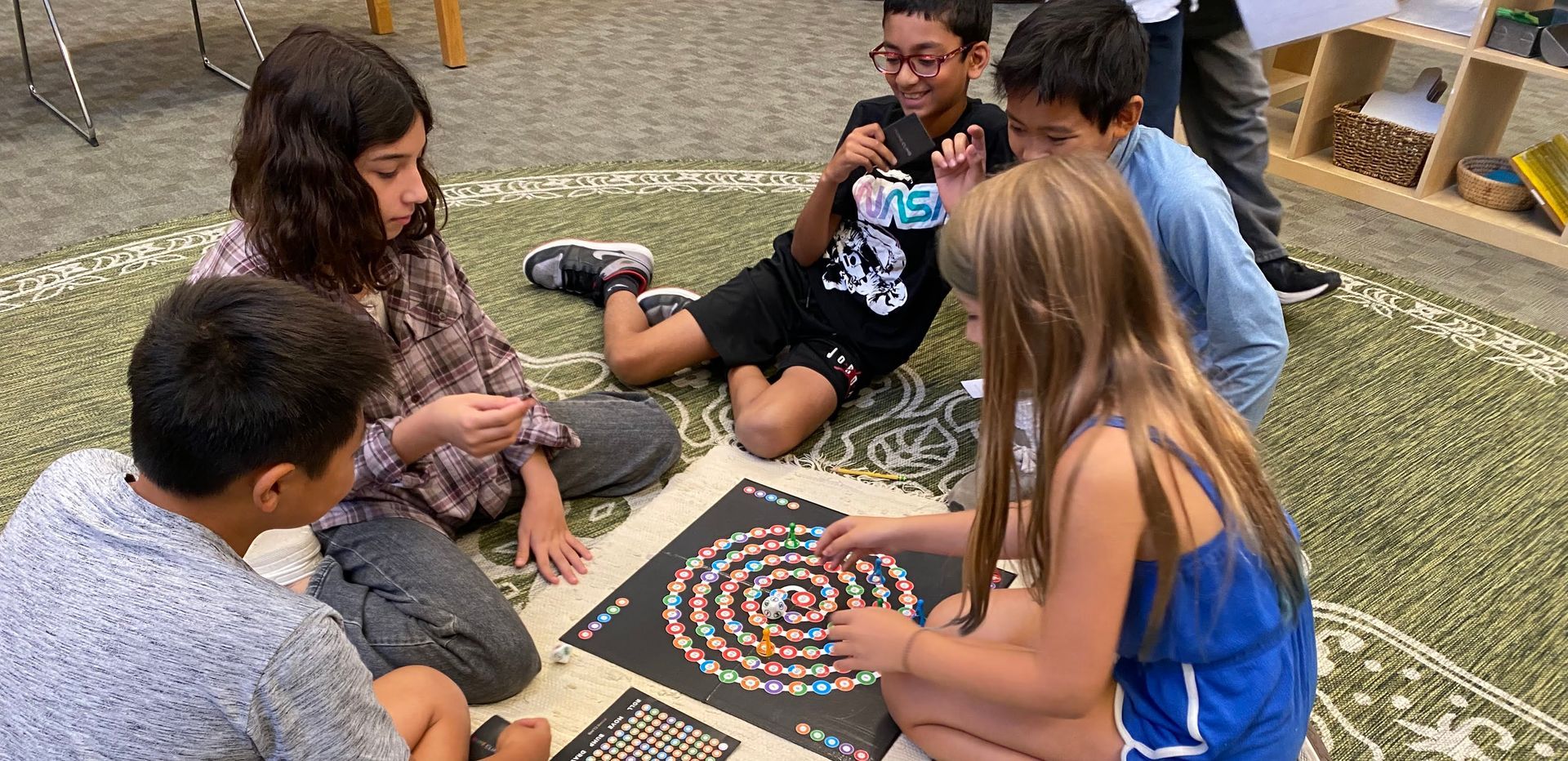
While there is certainly a place for more rote practice or a summer workbook, the most fun way we practice math in the summer is by playing games.
Pick your starting spot below and do something this week to support your kids’ engagement with math!
If all you have is a deck of cards:
- For basic numeracy and building fluency with addition, blackjack is fabulous. If you decide to incorporate betting, you can use chocolate chips or goldfish crackers for chips.
- For greater/less than comparisons, play golf. Great for logic and strategy, too. Plus, it is both fun and simple to understand.
- For building the essential skill of finding partners to ten, remove the tens and face cards and make a memory game kids will love, like this.
If you have dice:
- For great addition practice with lots of logic and probability elements: Yahtzee
If you want to purchase a full-on math game:
- Tiny Polkadot is the best for practicing all kinds of numeracy skills ages 3 to 10.
- For a quick, delightful cardgame to learn math facts, the Jump series is fantastic.
- Prime Climb is for kids who know more of their multiplication facts and is a truly challenging and brilliant game kids love. If your child uses Multiplication By Heart to learn math facts (which I recommend!), this game uses the same color-coding system that helps them make further connections between numbers.
For the board game family:
If you have kids at two very different math levels, perhaps KingDomino can offer you the magic it did for our family. When I had one child who was just learning the relationships between two-digit numbers and an older child who needed multiplication practice, this game offered them each the perfect role and, math aside, is a super fun family game.
For the truly hard core board game family:
The Wingspan family of games is only for those very committed to playing board games – there are a dozen elaborate ways to get points, plus you learn about birds. If you are as nerdy as me and your kids are at least eight or nine and serious game players, too, it is a super complex delight.
The one none of us want to deal with but is everywhere and involves loads of math:
Ah, Monopoly. If you can get your kid to play with other kids, grandparents, or aunties instead of you, set yourself free.
And finally, for the game haters (or those who simply want more variety):
- Double a recipe: Print a cookie recipe that will motivate your child and ask them to write out the doubled amount for each ingredient. Then they make the double recipe and take some to a friend or neighbor. (Free resource find: Here is a whole guide to using cooking to practice math.)
- Calculate gas mileage: If your kid has learned long division, push that odometer button every time you fill up and tell them the mileage to divide by how many gallons you buy – I know your modern car probably tells you the gas mileage, but suspect the car might be exaggerating and have them check! (Here are ideas for math to have kids do for your summer road trips.)
- Do carpentry or sewing: Anything with measurement! Tell your kids you need to know the square footage of the rooms of your house, build a birdfeeder, sew a tablecloth, anything that gets them measuring and calculating in a meaningful way. (Free resource find: Here is a whole guide to math around the house.)