When at Wit's End
Four key strategies to strengthen your parent-child connection: understanding mistaken goals, using playful parenting, scheduling special time, and creating visual routines.

Our children are hard-wired to test boundaries. They do this while simultaneously wanting assurance that they are accepted and belong. While this tendency may try our patience, it helps to remember that children just want to know that we can maintain both limits and connection.
Over the years, we’ve found four key approaches that, when used in parallel, can help re-establish relationships, provide clarity of expectations and routines, and help children feel understood and valued.
Mistaken Goals
Often, our children act out when their needs are not being met in some way. If we can understand what our children are trying to achieve through their behavior, we can address these underlying needs. The Positive Discipline model identifies how many behaviors stem from four mistaken goals: the desire for attention, the need for power, the hunger for revenge, and the assumption of inadequacy.
If a child's goal is attention, the coded message behind the behavior is "notice me" or "involve me usefully.” If the need is power, their behavior conveys that they need meaningful ways to contribute. If children are trying to get revenge, they are communicating they are hurting or need their feelings validated. When their goal is assumed inadequacy, expressed by giving up or wanting to be left alone, the message behind their behavior is a need for others to believe in their capability and show them small steps toward success.
We tend to have emotional responses when our children misbehave, and those feelings are the key to breaking the code of behavior. We recommend using this Positive Discipline Mistaken Goal chart. Use the first column to identify how we feel when faced with the behavior. The subsequent columns (such as how we tend to react and our child’s response) help hone in on the possible mistaken goal. Then, the chart also helps identify the possible beliefs behind the behavior, how adults may contrive, the underlying message, and proactive and empowering responses to shift the behavior.
Pausing and remembering that misbehavior is a form of communication can help us respond to our children in more supportive ways.
Playful Parenting
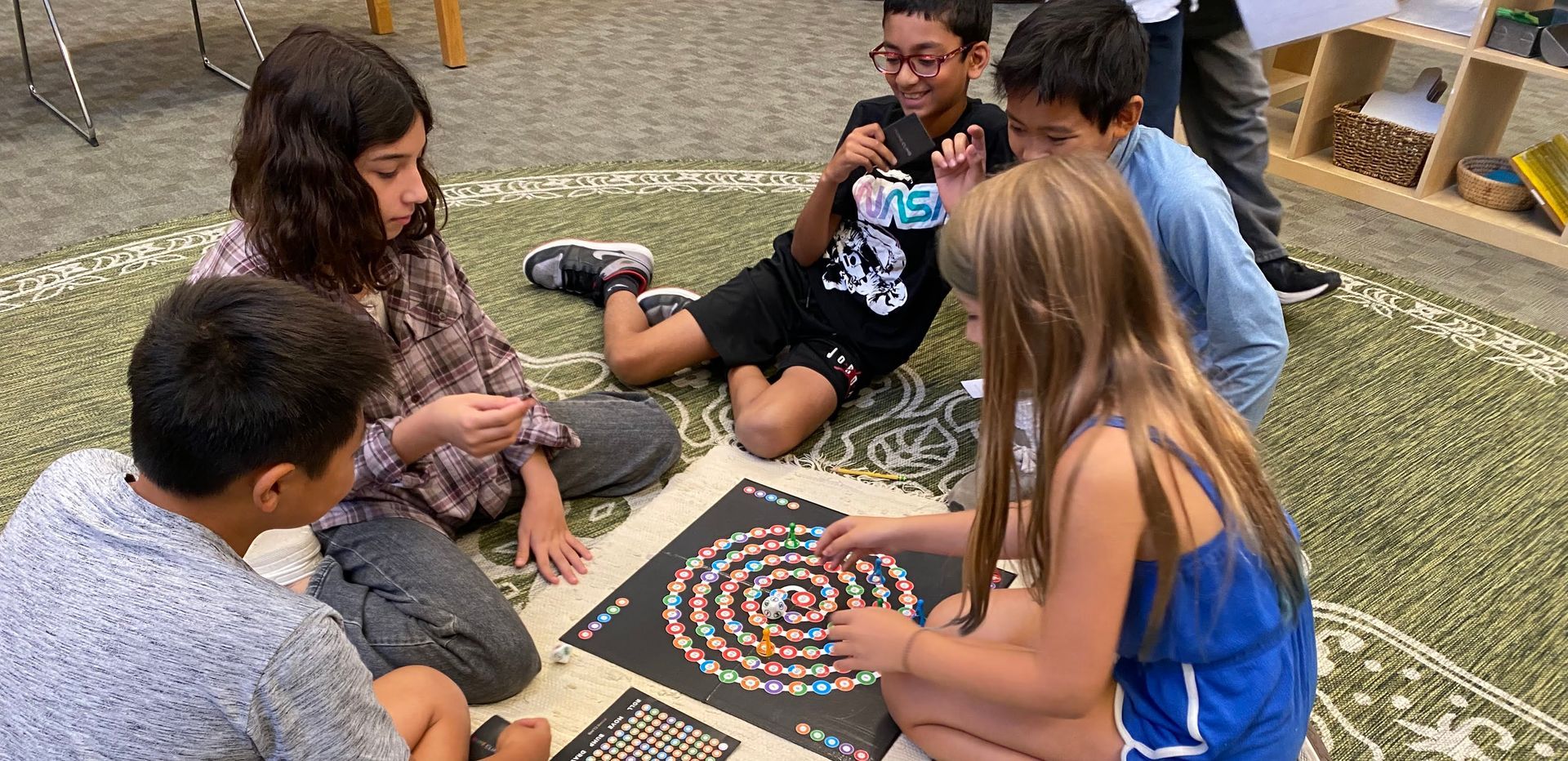
Play allows children to process and make sense of their lives. They need play, and as Lawrence J. Cohen, PhD so eloquently explains in his book, Playful Parenting, children need the adults in their lives to play, too. Even though we may not feel like playing, engaging in this way can create more closeness, cooperation, and confidence in our children.
When there is a particularly tricky situation that keeps arising–perhaps bedtime, getting out of the house, sharing with a sibling, or something else–using a “playful parenting” model can help. To do this, first, briefly discuss the challenge together during a relaxed time when everyone is in a good mood. This conversation should be non-judgmental and focused more on making observations. For example, “I’ve noticed that when it’s time to leave for school, you seem to get really stuck, and then I get angry because we will be late. Have you noticed that?” This can be a time for your child to share their perspective, too.
Then, with your child, try acting out the scenario in different ways: when everything goes well, when everything falls apart, with a new approach, etc. It’s also super enlightening and fun to try reversing roles. Have your child be the adult, and you be your child. Not only does this lighten the mood about a friction-causing moment, it can also provide both parties some insight into the other’s perspective. Plus, this playful approach strengthens the bond you have with your child.
Special Time
Another way to proactively cultivate a positive relationship is by scheduling “special time.” Our children need our undivided attention, yet so often we are pulled in many directions. One way to address this is to commit to having five to ten minutes of one-on-one time with each child. Let your children know that this is when you will be with them one-on-one and 100%. If you have more than one child, each gets to choose what you both do together during that time, and it’s important to schedule separate one-on-one time with each.
Be sure to play anything they want during this time and commit to the time together. Children love this special time, and be forewarned, they tend to choose the activity we least enjoy! If this is the case, remember it is only for a short duration. Use a timer and stay committed to having the time each day. This undivided attention helps children feel secure and connected. The result? They are more cooperative with us and each other.
Let Routines Rule
If struggles arise around particular times of day (bedtime, mealtime, transitions, getting ready for school, etc.), shifting to a visual schedule can really help. The key is to collaborate (again during a relaxed time when everyone is in a good mood) with your child to create a visual schedule of what needs to happen during these typically challenging times of the day. For example, if bedtime is tough, brainstorm together about all the steps: brushing teeth, bath time, pajamas, picking out clothes for the next day, story time, etc. Then together you can create images, either by drawing them or taking photos of your child doing each step.
This visual schedule can be a checklist that is laminated so your child can use a dry-erase marker to check off each item they have completed, or pictures can be attached with velcro so they are movable (which allows room for the order to be changed if your child can reorder the flow of events). The idea behind this is to give children a sense of control and to also take the focus off of us reminding them of the next steps. When our children hear us giving constant reminders about what to do next, they can easily slip into resistance mode. Plus, by providing information through the visual sense (not just the auditory sense), a visual schedule helps children understand more concretely and remember the expected structure and sequence.
We’d love to hear how these techniques work for you! One of the gifts of these strategies is that they can help you reconnect to the joy of raising these amazing beings!