Summer Reading for Parents
Books for Parents with Children of All Ages
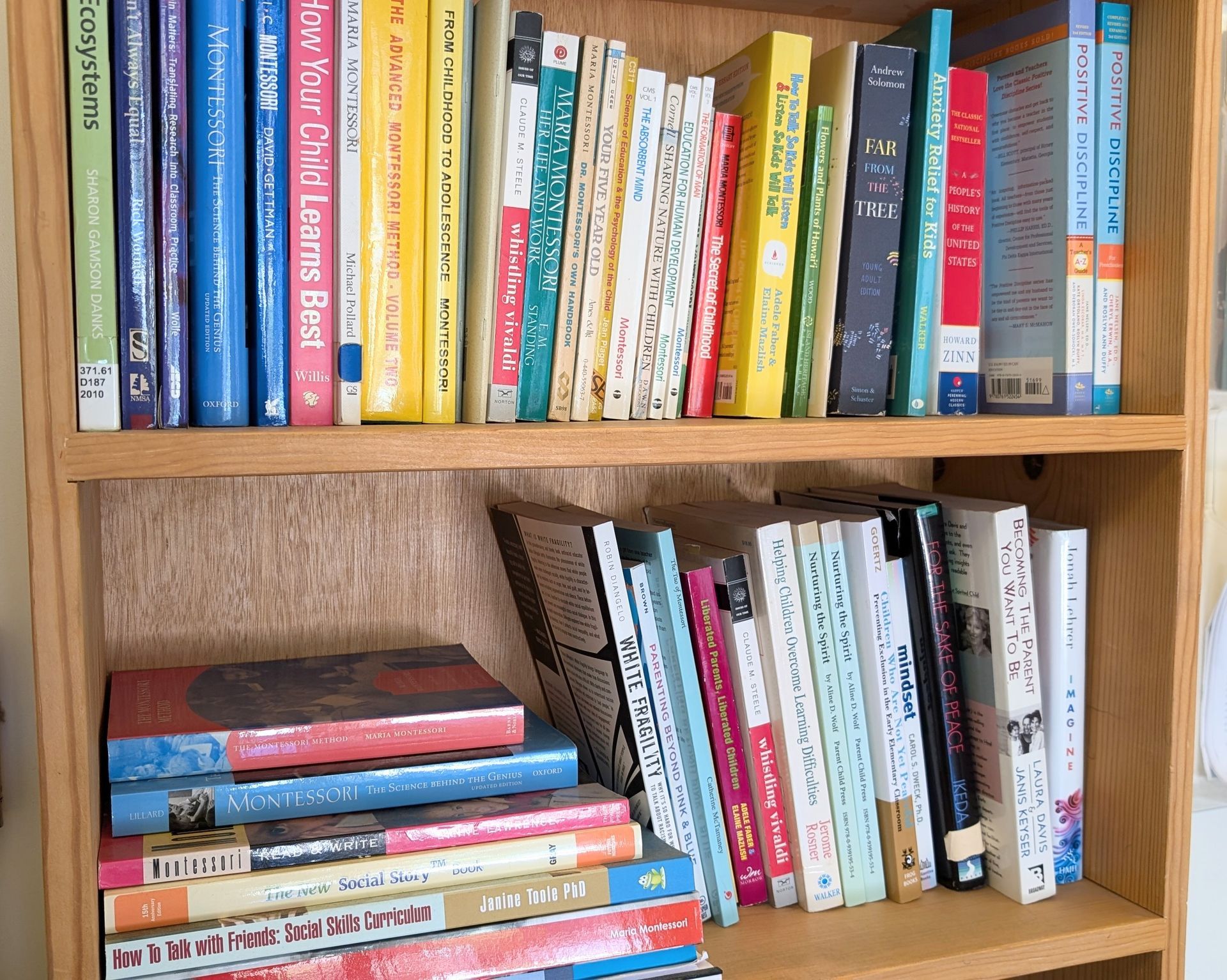
This summer is a great time to carve out a little adult time and disappear into some good books! While we certainly advocate for some mindless escape, we also recognize that all the extra time with family might mean you’d like some parenting resources, too.
With that in mind, we’re sharing a few of our recent favorite resources for parents and caregivers. While these aren’t specifically Montessori books, they are so aligned with what we do that we just had to share!
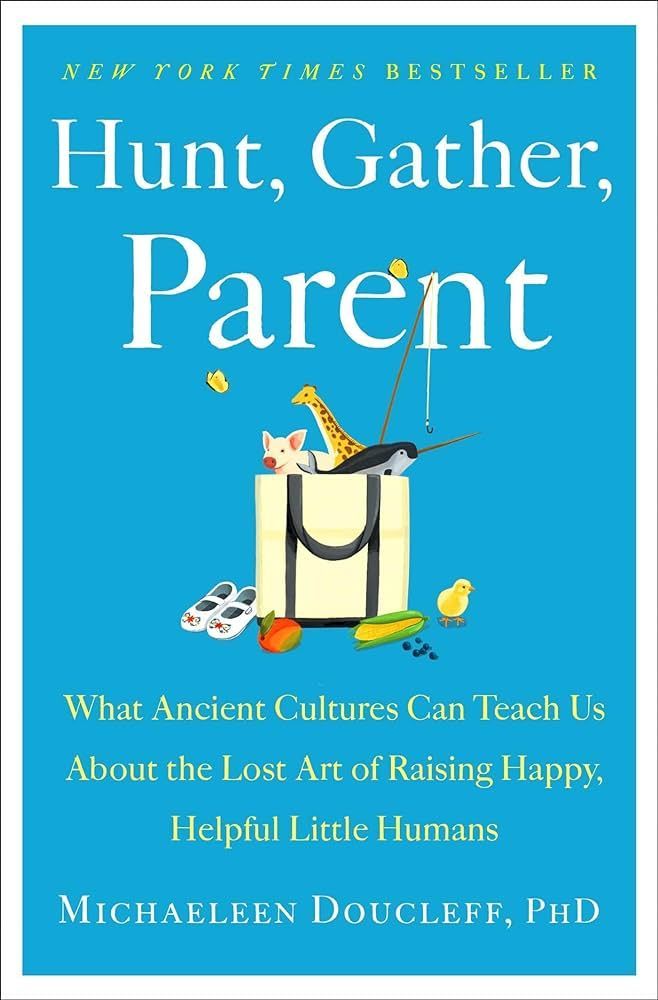
Hunt, Gather, Parent: What Ancient Cultures Can Teach Us About the Lost Art of Raising Happy, Helpful Little Humans
by Michaeleen Doucleff
While in the midst of parenting a feisty toddler, NPR correspondent, Michaeleen Doucleff was covering medical stories in remote areas of the world. An exhausted and slightly strung-out new mom, Doucleff noticed distinct differences in the parenting practices of cultures she visited and those she was trying to uphold in her home in San Francisco. So she shifted gears and immersed herself, with her two-year-old in tow, in three cultures — the Maya, the Hadzabe, and the Inuit, all of which excel in instilling confidence, kindness, and helpfulness in their children.
What Doucleff experienced and learned as she lived with families in these three cultures is quite simply profound. She saw firsthand how her host families interacted differently with her daughter, Rosy, who blossomed as a result. As Doucleff began to internalize different parenting practices, she also found that her relationship with Rosy transformed.
It’s worth noting that none of the cultures Doucleff experienced are frozen in time: the families have smartphones, children have plenty of screen time, junk food exists, and the kids still have to get out the door to get to school on time. However, a significant difference that Doucleff found is that the families’ parenting is grounded in thousands (perhaps tens of thousands) of years of tradition that support the gentle and kind growth of helpful, self-sufficient little humans.
With an engaging narrative flow, Hunt, Gather, Parent offers a clear organization of four core elements that comprise a common thread of what Doucleff calls a universal (non-Western) approach to parenting. Plus, in each section, she offers practical steps for trying out these different elements, including ways to “dip your toe” into the approach, as well as ways to “jump in.”
While Doucleff wrote the book to explore how to better connect with and support her toddler, the concepts and advice apply for all-aged children (and even work for teens and pre-teens!). The results are stunning. Even just dipping your toe into a few strategies is transformative.
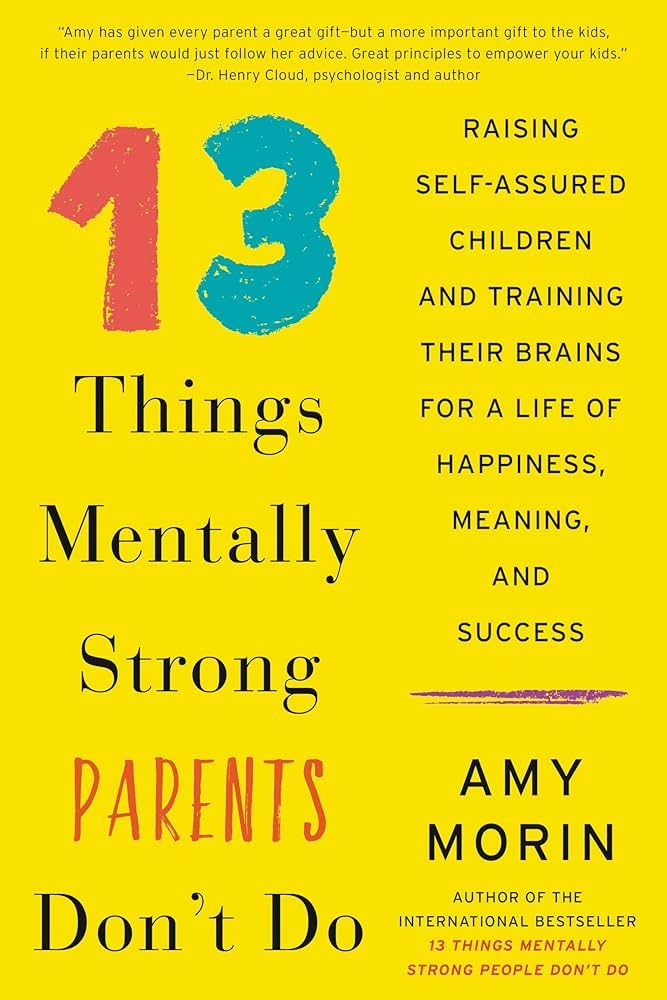
13 Things Mentally Strong Parents Don't Do: Raising Self-Assured Children and Training Their Brains for a Life of Happiness, Meaning, and Success
by Amy Morin
So often we want to rescue our children, clear the path for their success, and ensure they are happy. But in the process, are we helping them develop the internal skills they will need throughout life?
After experiencing a series of personal tragedies, Amy Morin, a clinical social worker, psychotherapist, and foster parent, began thinking about what helps people be resilient. Ultimately this led to her book, 13 Things Mentally Strong People Don’t Do. As people read her book, she heard time and time again that readers wished they had learned the skills of mental strength and resilience from an early age. So she created this incredibly helpful guide for parents and caregivers.
Each chapter is devoted to what to avoid so that good, healthy habits can be cultivated. The 13 things mentally strong parents don’t do are:
- They Don’t Condone a Victim Mentality
- They Don’t Parent out of Guilt
- They Don’t Make Their Child the Center of the Universe
- They Don’t Allow Fear to Dictate Their Choices
- They Don’t Give Their Child Power Over Them
- They Don’t Expect Perfection
- They Don’t Let Their Child Avoid Responsibility
- They Don’t Shield Their Child from Pain
- They Don’t Feel Responsible for Their Child’s Emotions
- They Don’t Prevent Their Child from Making Mistakes
- They Don’t Confuse Discipline with Punishment
- They Don’t Take Shortcuts to Avoid Discomfort
- They Don’t Lose Sight of Their Values
To make it manageable, Morin provides real-life examples and breaks them down to examine any underlying problems and key issues. She also provides a little self-reflective opportunity for readers to take a look at how these issues might come up in our personal and parenting lives, before then examining why we might be falling into some unhelpful patterns.
With a better grasp of what we are doing and why, Morin helps us look at how each approach can affect our children in the long run and what we can do instead. Every chapter is full of concrete techniques and steps, as well as troubleshooting guidelines and common traps. To drive the message home, Morin recaps each of the 13 points with what is and isn’t helpful.
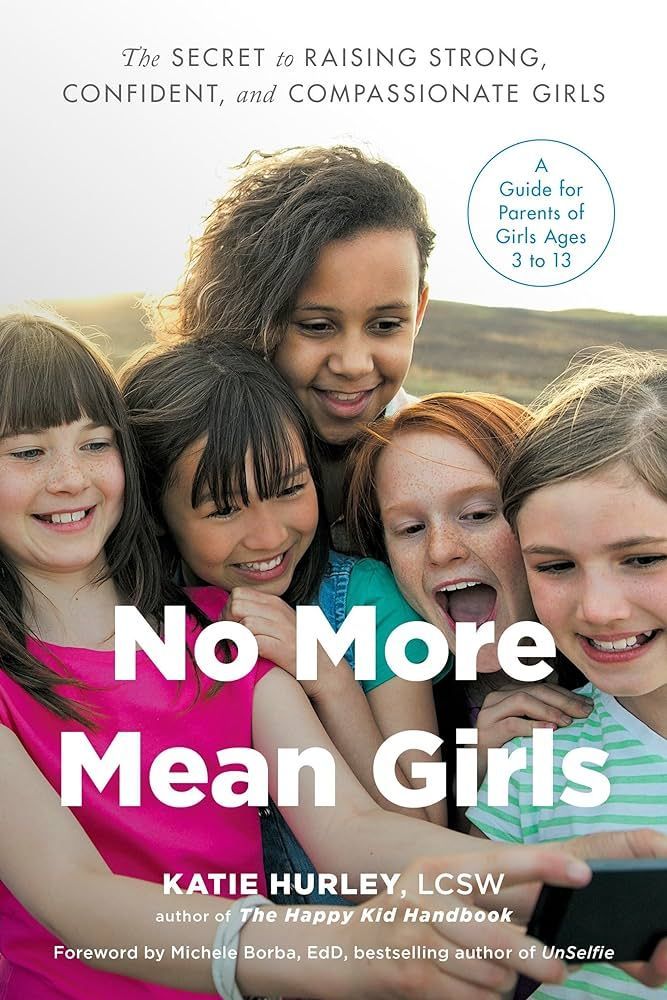
No More Mean Girls: The Secret to Raising Strong, Confident, and Compassionate Girls
By Katie Hurley
Many of the books written to address the “mean girl” dynamic are geared toward pre-teens and teens. However, in her work, child and adolescent psychotherapist, Katie Hurley, observed more and more of this “mean girl” dynamic starting as early as age three. Even though they are in the midst of these interactions, our young girls don’t necessarily have the skills to cope with such sophisticated social challenges.
Recognizing that these difficult topics can also feel overwhelming for parents and caregivers, Hurley breaks down the components of how we can support our young girls in a variety of ways. In addition to digging into the bigger concepts – such as developing healthy friendships, distinguishing between likability and popularity, building an authentic self, having a voice and expressing yourself, and developing leadership skills and social responsibility – Hurley weaves in two key ways to practice concrete support through sections she calls “Parent-Teacher Conference” and “Girls Can!”
The Parent-Teacher Conference boxes offer key points to digest, look for, or try. They are incredibly helpful as touch-points throughout the book and offer an easy-to-access way to flip back and reconnect with essential elements of each chapter. The Girls Can! sections provide games and activities to try with the girls in your life, as well as ways to introduce concepts we might not be used to talking about.
While this is primarily a guide for parents of girls ages three to thirteen, so much also applies to our boys as well. Incredibly practical and chock full of what to do, this is the type of book in which you’ll thoroughly dog-ear the pages!