Ready for the Universe
Geography for the Elementary Age
The Universe
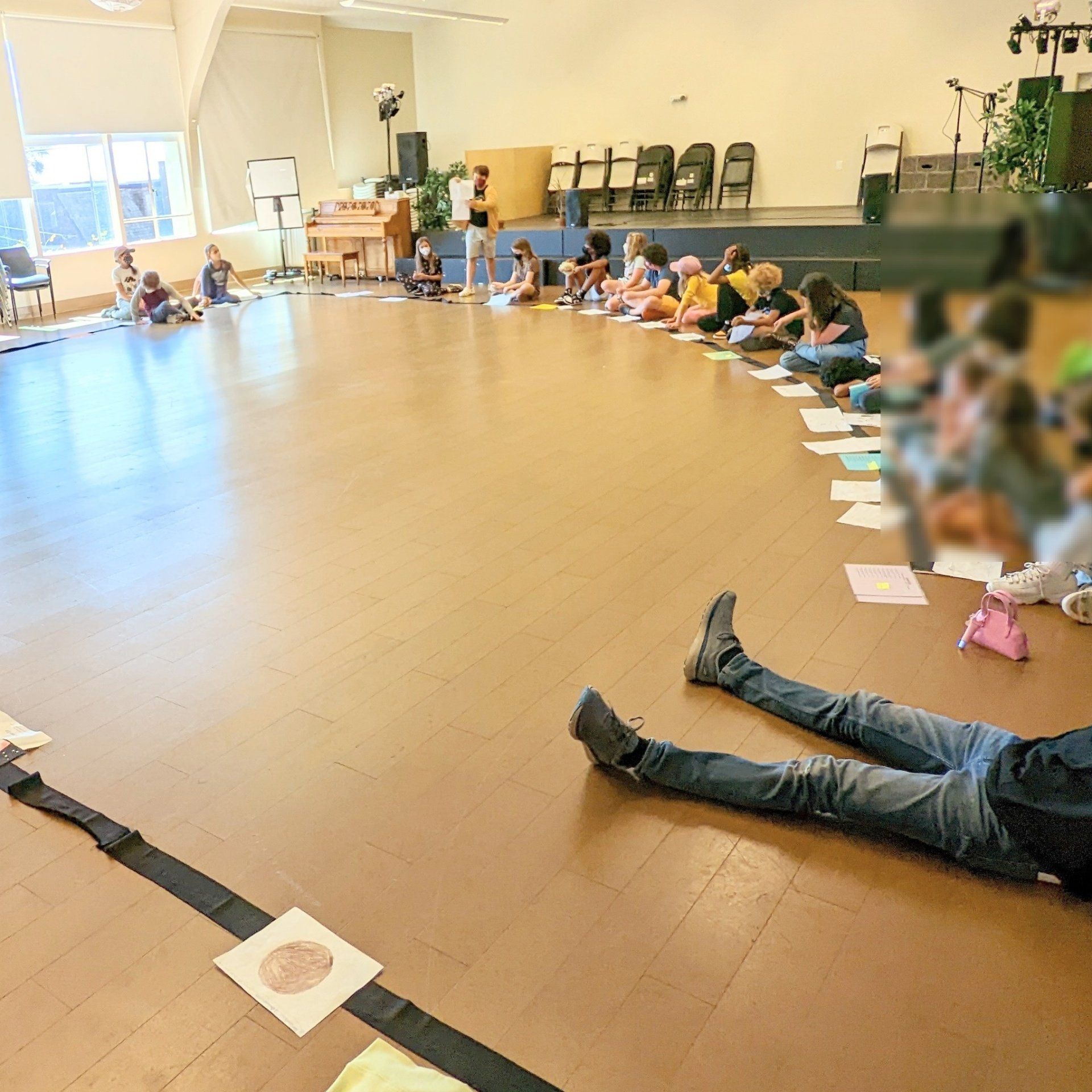
Elementary-age children have a consuming interest in everything! To cater to this all-embracing thirst for the reasons of everything, we begin with the universe. One of the earliest lessons we introduce is the story of the universe. From this first story, children are delighted by a myriad of lessons and activities which fall under the general heading of ‘geography.'
Beginning with the universe gives elementary children a big-picture context. In Montessori, rather than encountering bits of disconnected knowledge, children learn about the order and harmony of the universe, as well as the relationships that exist between all things.
“If the idea of the universe be presented to the child in the right way, it will do more for him than just arouse his interest, for it will create in him admiration and wonder, a feeling loftier than any interest and more satisfying. The child's mind then will become fixed and can work. The knowledge he then acquires is organized and systematic; his intelligence becomes whole and complete because of the vision of the whole that has been presented to him and his interest spreads to all, for all are linked and have their place in the universe on which his mind is centred.” — Dr. Maria Montessori, To Educate the Human Potential
Constructing Understanding
Dr. Montessori observed that children around the world tended to ask similar questions at this age. The geography presentations and lessons support these fundamental reoccurring questions.
Our goal is to help elementary children have an explosion into understanding. However, this kind of understanding does not come from adults explaining everything.
Instead, we give children experiences and just enough information so they can find out more and make associations. When children make their own connections, real and lasting understanding happens. Even better, the children respond with enthusiasm and excitement!
Geography Topics
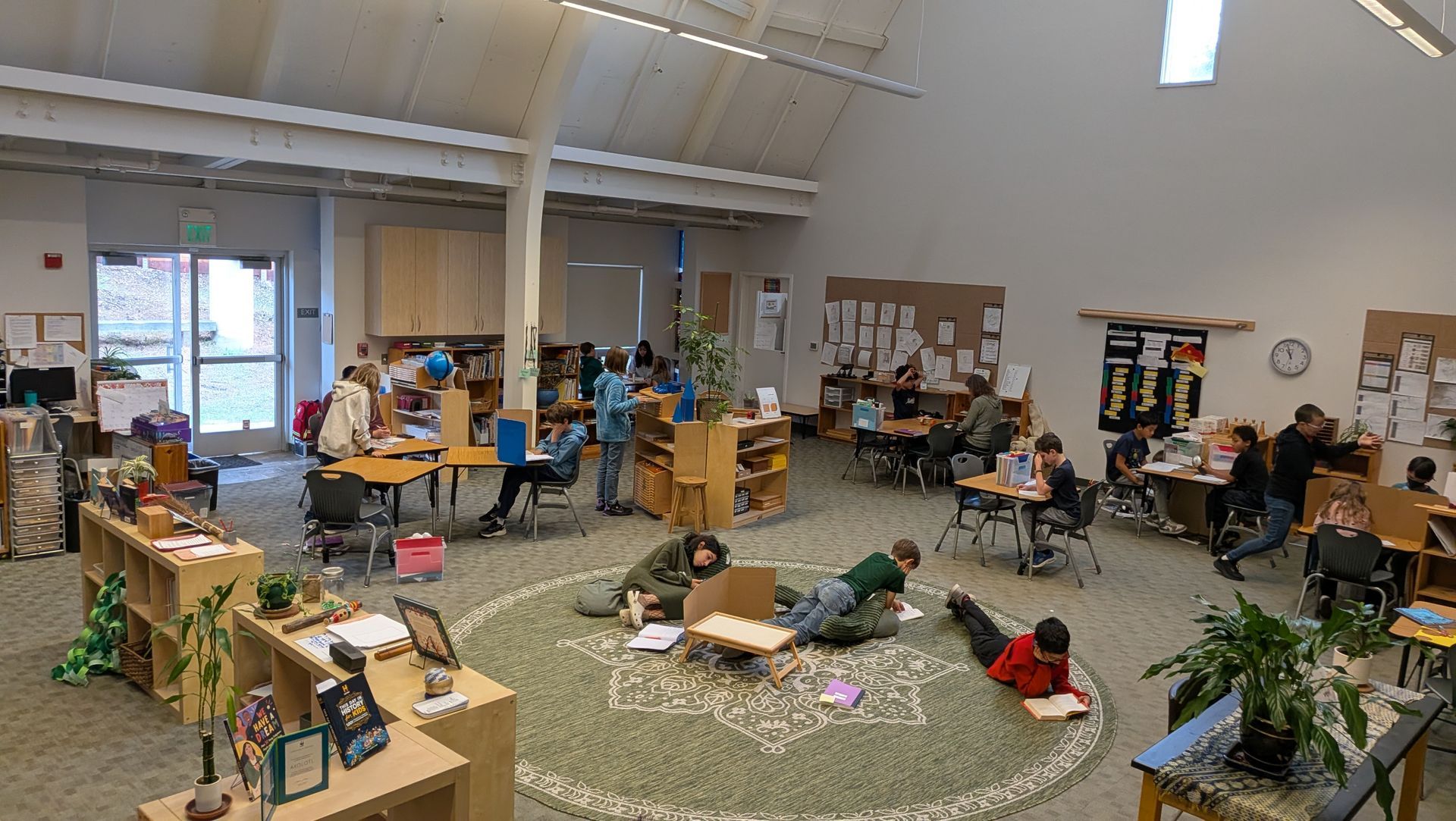
Children in a Montessori classroom do not encounter subjects grouped under curricular headings. Subjects are integrated because children are building their minds. They are exploring their world, rather than the chapters of a textbook. Although there is a structure in the classroom environment, children have the opportunity to explore different many different aspects of geography including:
- Space, Earth, and the Universe
- Composition of the Earth
- Nature of the Elements
- Sun and Earth
- Work of Air
- Work of Water
- Life on the Land
- Interdependencies
- Economic Geography
The lessons we present, and the resulting children’s explorations, lead into astronomy, physics, chemistry, meteorology, geology, and more. For example, as we look more closely at how the earth revolves around the sun, children learn about solstices and seasons, climatic zones, and flora and fauna found in particular regions.
Aids to Understanding
For each topic, we provide imaginative aids, often in the form of stories, colorful impressive charts, and a variety of experiments. Many of these instructive aids have been selected to provide impressions, not just facts. The aim of our geography presentations is to intrigue the children and spark their imagination. We want them to be inspired to find out more!
We concentrate on giving key information, discussing reasons, and illustrating details, all of which draw children’s attention to certain phenomena. Once interest is there, children want to learn as much as they can. It is as if we are giving elementary students keys to knowledge and understanding. Once they have the keys, they can open doors and continue their explorations.
Geography is a vibrant aspect of the Montessori elementary and generates spontaneous, active, self-renewing interest! A love of learning blossoms in the children, and many develop a lifelong fascination with elements of geography. We invite you to visit our school and see this love of learning firsthand!