How Does Testing Work in Montessori?
Montessori assessment avoids traditional tests and instead focuses on authentic tasks and formative feedback for holistic student growth and self-directed learning.
So often we get asked how Montessori guides assess children’s work and progress without relying on quizzes, tests, or grades. If we remember that Montessori is about learning for life, we can flip this question and ask, how does assessment work when we move outside school walls and step into the world of work? In our work environments, do we have tests and grades? If so, how do they help us grow and improve in what we do?
Interestingly, a 1999 document “An Employer's Guide to Good Practices” from the U.S. Department of Labor Employment and Training Administration, has a whole chapter on issues and concerns with assessment, including the “limitations of tests in providing a consistently accurate and complete picture of an individual's related qualifications and potential.”
Before we dive into how we can get an accurate and complete picture of skills and potential, let’s first think about traditional forms of assessment and how they are designed to monitor students’ learning.
What do tests, quizzes, and grades really measure?
Rather than a measure of how much students have learned, grades tend to measure how good students are at testing. If we want students to have curiosity and intrinsic motivation to understand, it’s important to first recognize that grades inhibit that process. Rather than concentrating on learning, students’ focus shifts to doing what it takes to get an A.
When students are preparing to take a test or quiz, they are trying to anticipate what will be asked. In the process, they are trying to fulfill external expectations. Often after the exam is over, students lose interest in the content because their relationship with the material is about learning certain information to achieve a grade or pass the exam.
It’s important to thus recognize that grades don’t measure students' effort, creativity, grit, compassion, sense of place in society, character, capability, or even intelligence.
What if we designed assessments that provide a more accurate reflection thinking and problem-solving?
So it’s worth thinking about what we actually want to assess. Do we want students to just acquire new content knowledge or be able to apply this knowledge to new or existing situations? Do we want to see if students can produce something that demonstrates their understanding of the content or skill? Do we want to assess their writing ability, speaking skills, creativity, collaborative process, or organization?
If we focus on authentic assessments, we are asking that students apply what they have learned to a new situation, or perhaps we are requiring them to use some judgment to think about what information and skills are relevant and how they can be used. Similar to how adults are “tested” in work or personal life, often authentic assessments are tied to a real-world or complex situation.
In addition, authentic assessments offer students the opportunity to rehearse, practice, consult resources, and get feedback so as to refine what they are doing. Students can be innovative in this process and as a result, are often extremely self-motivated.
In Montessori classrooms, authentic assessments may take the form of:
● Role-playing or performing a historical event and exploring what might have happened if things during that time period had changed.
● Drawing a diagram of how a process works and showing what happens if a variable changes.
● Creating an advertisement or brochure to highlight qualities or review something learned.
● Writing a diary entry for a real or fictional character.
● Composing a poem, play, newspaper article, or persuasive letter to share important concepts.
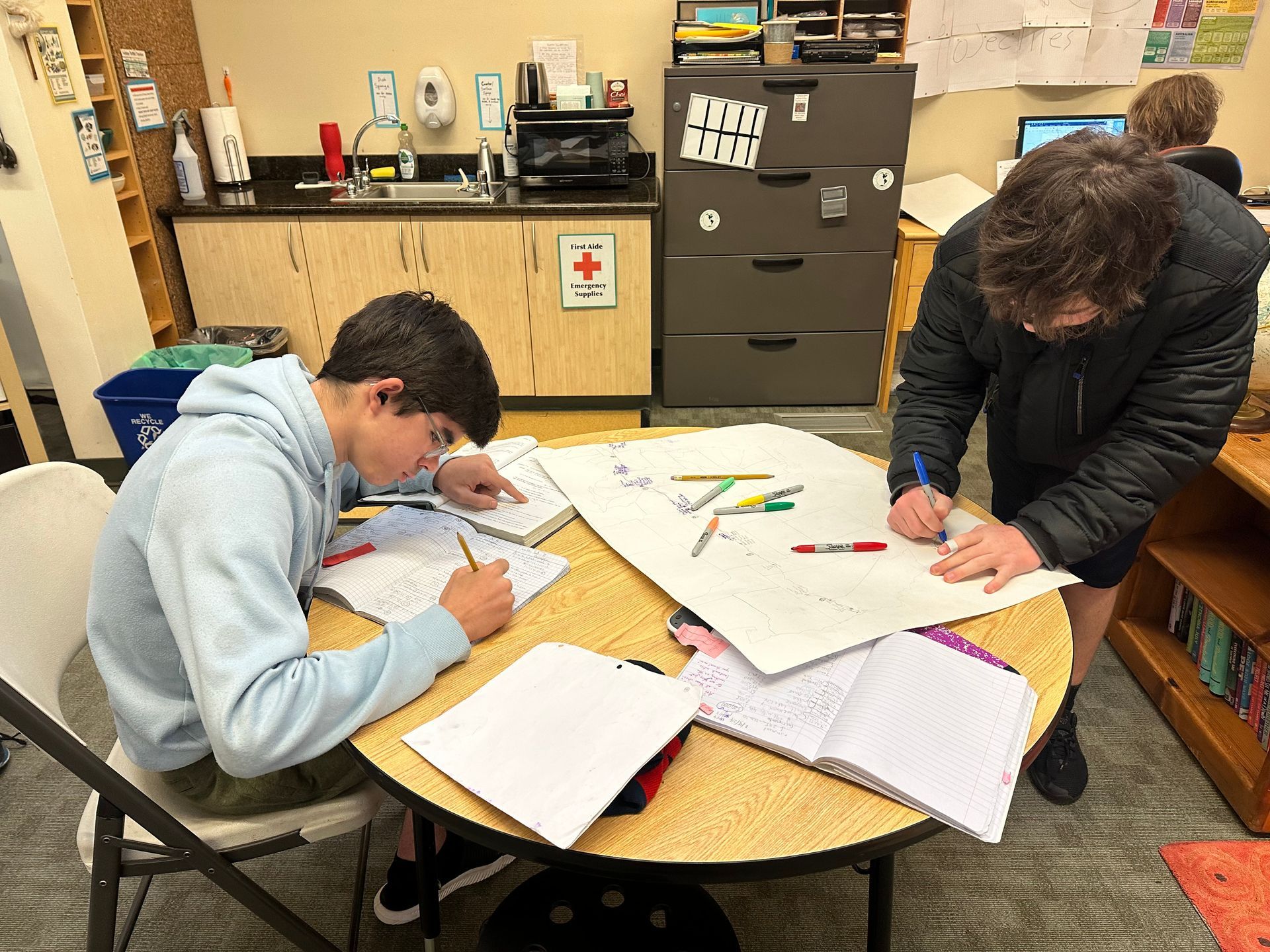
● Building a poster board for a research topic.
Montessori students love demonstrating what they have learned in creative, authentic ways. They present to their peers and parents. They grapple with concepts. They even teach younger classmates.
But how do teachers keep track of this learning?
In addition to authentic assessment, Montessori guides are also using their extensive training in observation techniques to understand students’ learning process, steps toward mastery, and needs for support. This is called formative assessment.
Formative assessment is a continuous, low-stakes, responsive process. This means that students are getting feedback and information while their learning is taking place. Through observation, the teacher is gauging students’ progress, determining what has been effective, and identifying what could be improved in the learning process. There are no grades involved, however the goal is mastery of the skill or content.
In a Montessori classroom, formative assessment can look like:
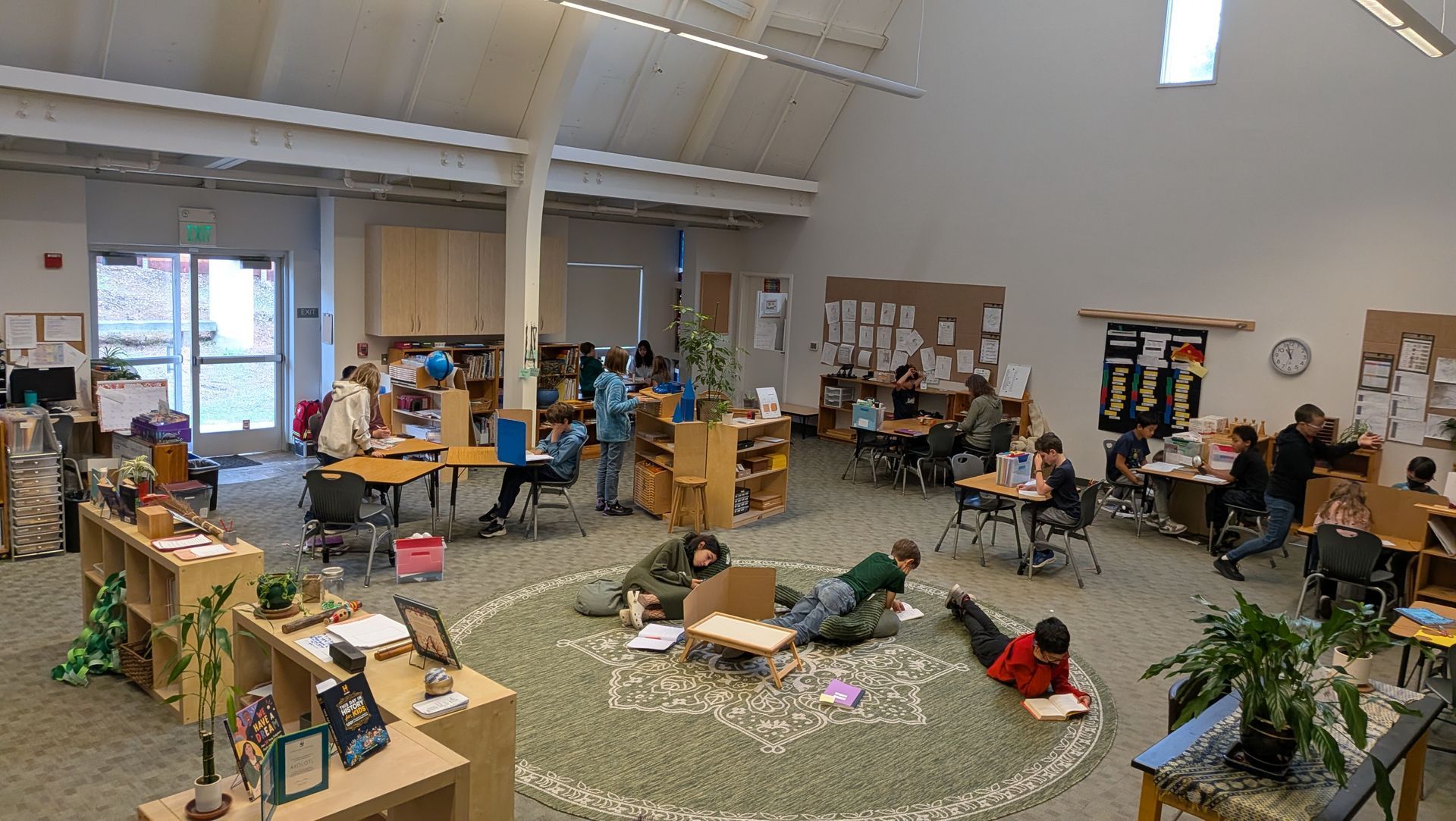
● The guide observing students during a lesson presentation and during the students’ independent follow-up work.
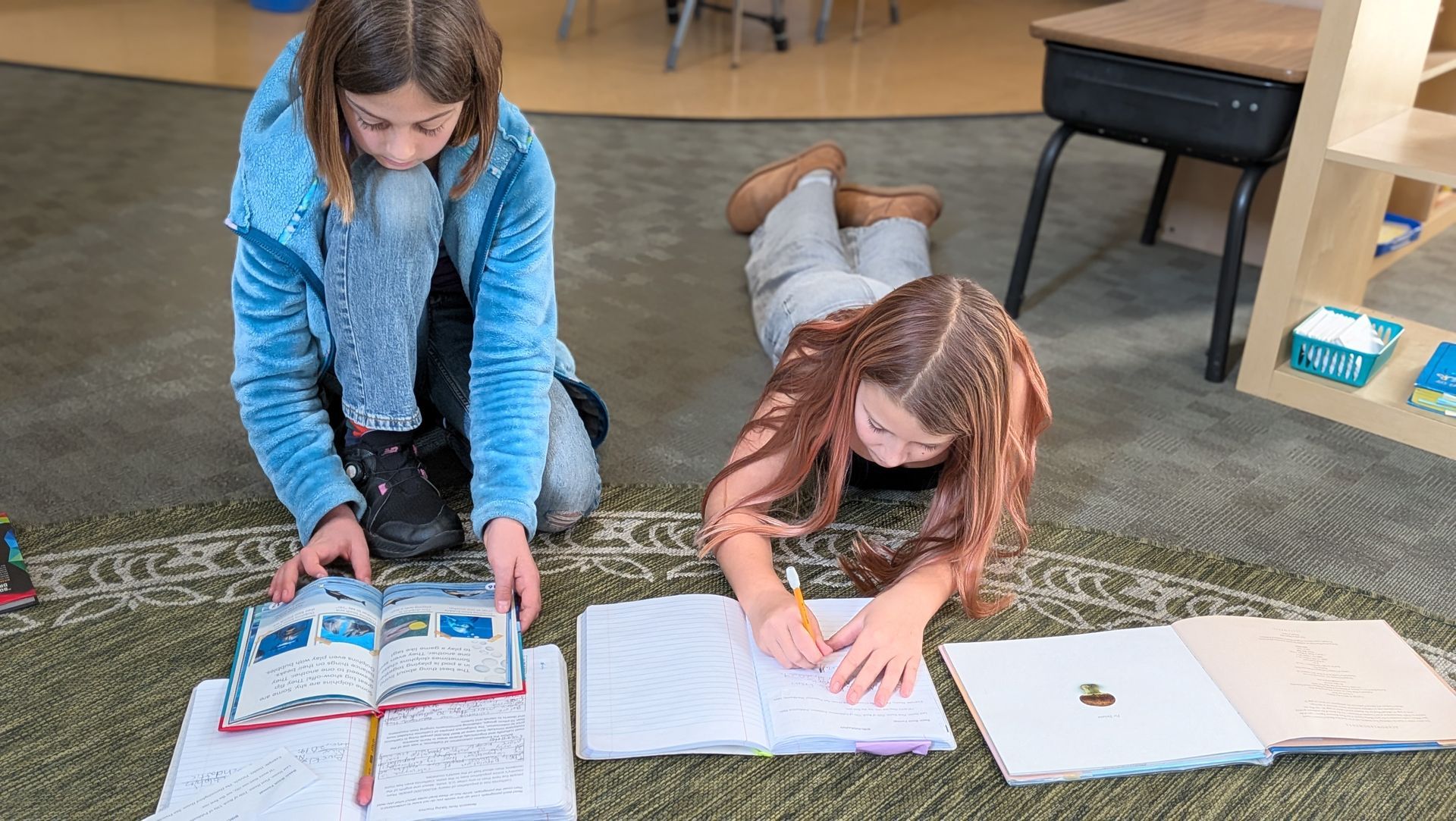
● Student reflection in work journals.
● One-on-one conferencing with the guide and the student.
● Discussion and review of content or skills.
● Students informally or formally presenting their work.
● Student self-evaluations.
● Students correcting their mistakes and reflecting on what they learned from those mistakes.
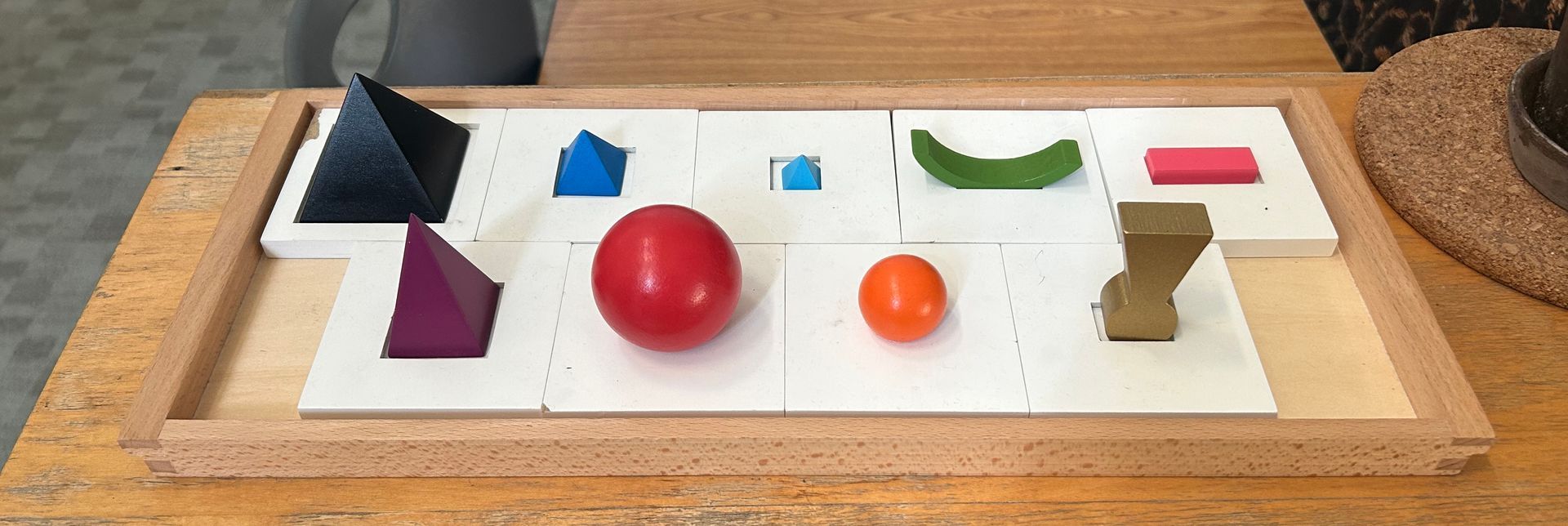
Formative assessment doesn’t have to be teacher-driven. In fact, in Montessori classrooms, students are often getting feedback and information about their learning from the classroom materials, many of which are designed to help children learn from their mistakes as they check their own work.
Formative assessment is a collaborative process that happens “with” students rather than “to” students. Montessori students and guides partner to get to know their strengths, interests, and needs. Because this is an ongoing, collaborative process, the guide and students can make small, immediate, impactful decisions to support well-being, learning-goal achievement, and self-efficacy.
What are the results?
When students experience authentic and formative assessment as integral aspects of their education, they become self-directed learners because they are active agents in their learning process. This translates to agency in other environments and throughout life.
In Montessori classrooms, we focus on getting an accurate and complete picture of children’s skills and potential. Schedule a tour to learn more about what this looks like in action!