Montessori Adolescent Programs and Real-World Learning
Explore how Montessori adolescent programs foster independence, responsibility, and empathy through micro-economies, preparing students for adulthood.
Our adolescents are on the road to adulthood. Physically and mentally, they are no longer children. However, they are not yet adults - they are in between. As a result, adolescents are deeply interested in what adulthood means and strongly desire to figure out their part in society.
One thing everyone knows about adulthood is that adults work and (mostly) pay their bills. Of course, this is not all that adults do. We have roles to play in society through our hobbies and passions. All of that contributes to the roles we play in an economic system. Although money is involved, economics is ultimately about our web of interdependence. Every one of us depends upon the work of others.
To try to understand their future roles, adolescents observe adults and are curious about how to make their way as adults do. Although our adolescents may not outwardly show this interest, they are watching us. They want to be brought into side-by-side work and are keenly interested in gaining economic independence.
Micro-Economies as a Form of Production and Exchange
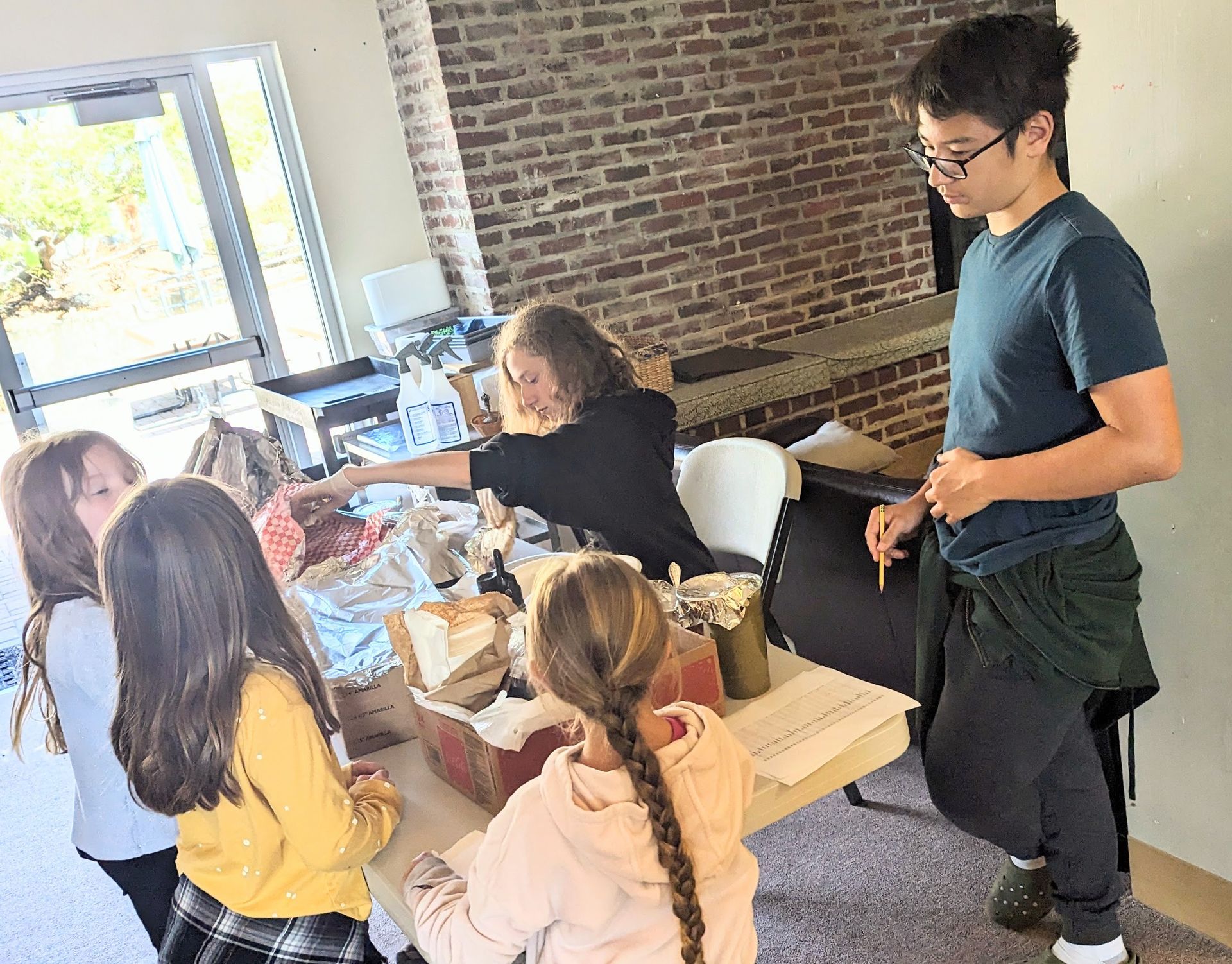
To provide real-life learning on adolescents’ road to independence, East Bay Montessori students get to develop and run micro-economies, which are small-scale businesses within the school community. These micro-economies help adolescents learn practical skills (like budgeting, planning, customer service, and teamwork), foster creativity and problem-solving, and encourage responsibility and accountability.
Micro-economies are a way for adolescents to practice production and exchange through activities like running Pizza Friday, Tamale Tuesday, creating seasonal crafts or baking goods to sell, or providing child care for school events. The work of adolescents can be seen as a microcosm of society because the production and exchange activities they undertake help illustrate the necessity of a division of labor.
Money and Morality
As a community, adolescents create rules around their micro-economies. Because adolescents have a sensitivity for justice, they are very interested in exploring money and its morality. As a result, they often grapple with questions like:
What is a fair price to charge?
Should we include our labor when pricing?
How can we do this ethically?
How should we treat our customers? Our suppliers?
How do we want to use our money to express our beliefs and values?
In figuring out the role money plays in their micro-economies, adolescents also practice bookkeeping, how to make projections, and when to invest money in community efforts. They can explore what percentage to keep to invest in their own economy and how much they can afford to give to others. At EBM, students also decide how much of their profit goes toward an end-of-the-year trip!
Long-Term Benefits
By offering opportunities for adolescents to participate in all the aspects of the production and exchange cycle – from creation to sale – each individual can find a multitude of ways to engage and learn new skills, apply interests, and contribute to the economic well-being of their community.
In addition, through meaningful production and exchange, adolescents build empathy and a service-oriented mindset. The experience of collaboratively creating and implementing micro-economies fosters a sense of purpose and belonging. Ultimately, this work prepares our young people to become active, contributing members of their communities.
By supporting these activities in a morally grounded way, we help our adolescents experience valorization. They realize they have something to offer and are initiated into an economic system that unites people. At the age when adolescents are starting their journey to adulthood, what could be more fundamental?
Really, though, it’s most powerful to see how Montessori offers real-world learning! We invite you to schedule a tour to learn more about how Montessori prepares our young people for a positive future.