Early Childhood
Berkeley Campus
PRE-K - Kindergarten (AGES 2.9 - 6)

We are no longer accepting applications or providing tours for our Early Childhood campus. *The Early Childhood Campus in Berkeley is closing at the end of the 2022-2023 school year*
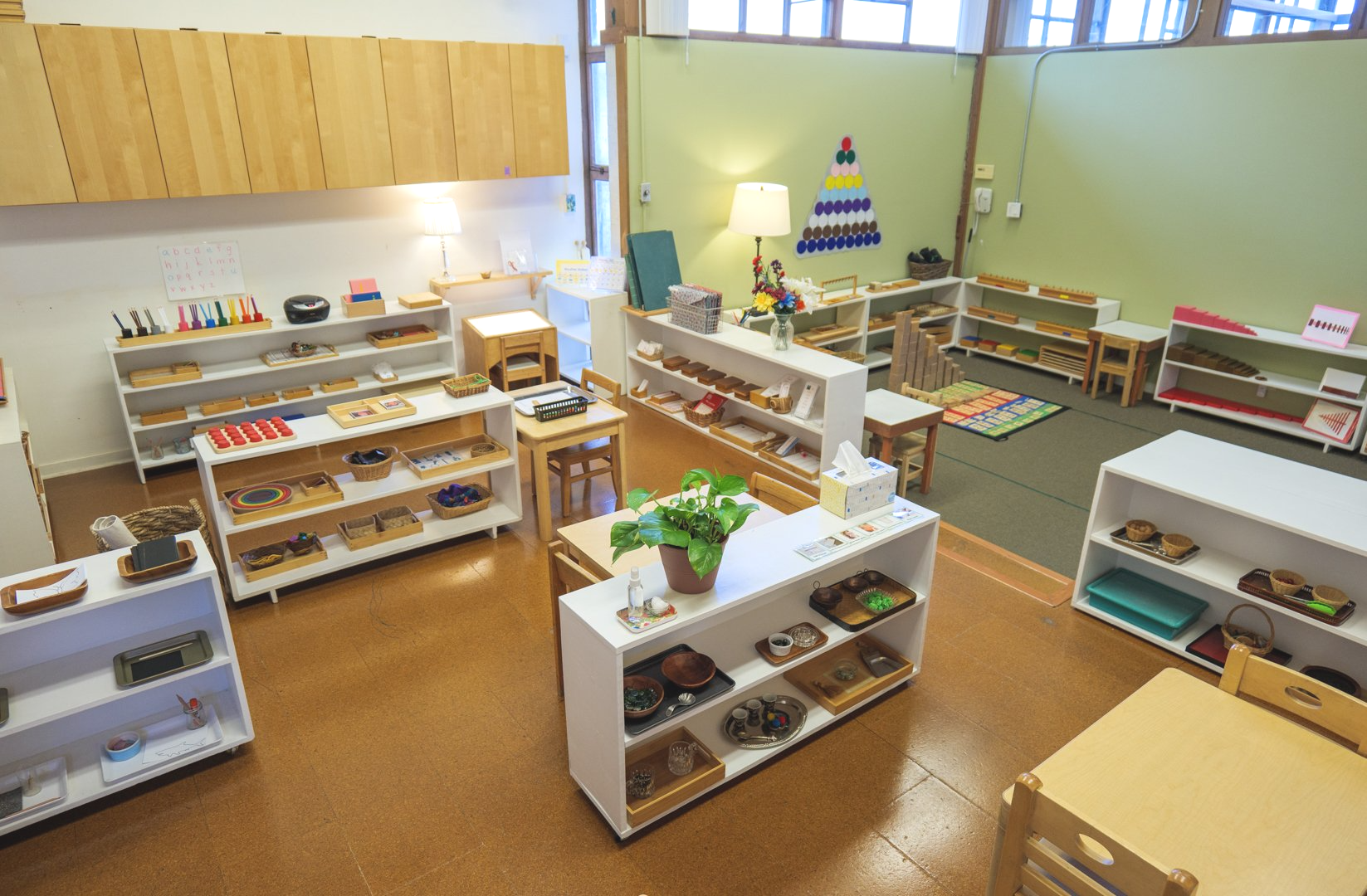
MFS provides a thoughtfully designed curriculum for 3-6 year olds that readies children to navigate their social environment and build independence. Students will gain a sense of order, concentration, and coordination that incorporates all senses into the learning process. We provide traditional Montessori materials and a caring, committed community where exploration can thrive.
A Window Into the Classroom
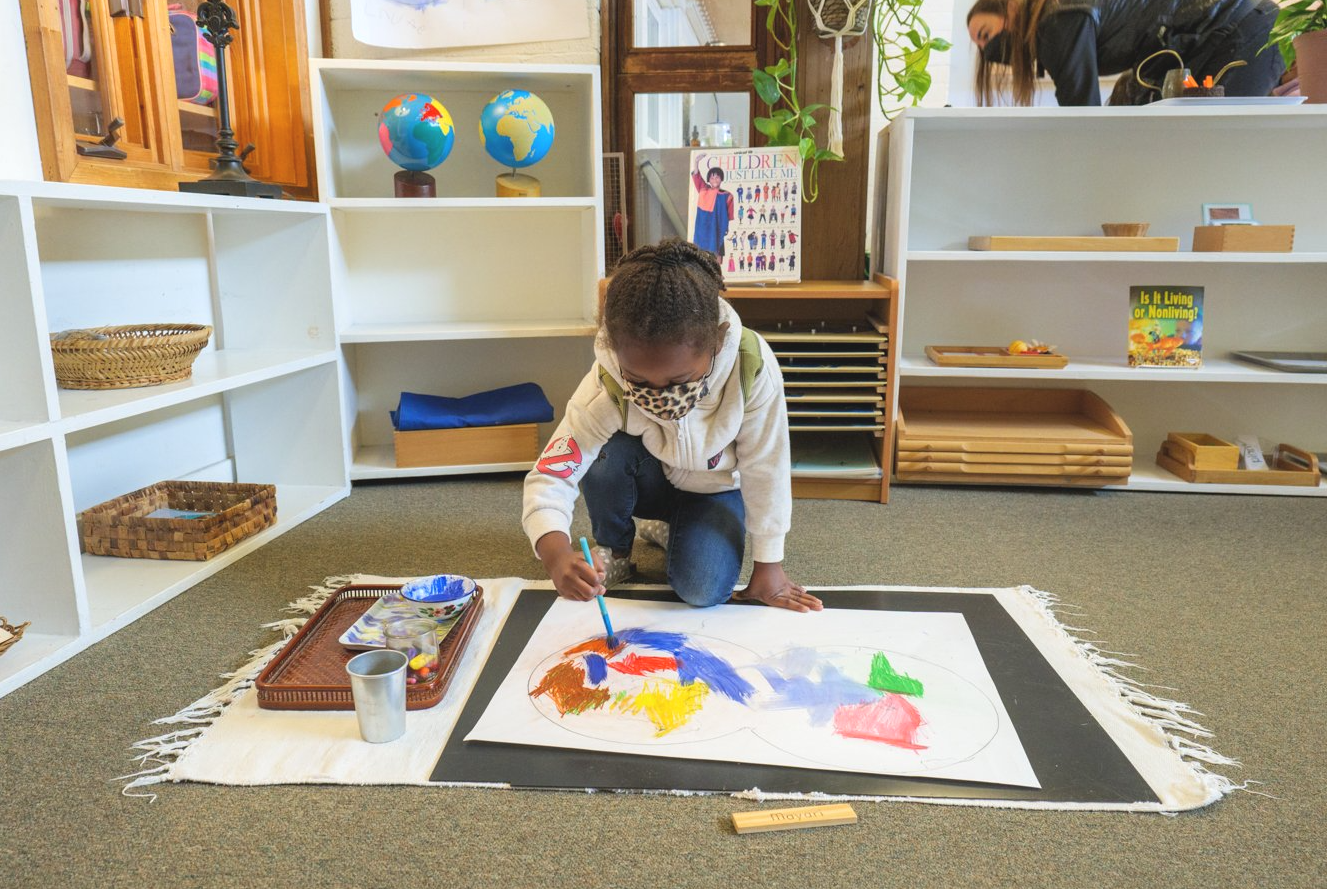
The Early Childhood Program at Montessori Family School is located at our Berkeley Campus (north side of UC Berkeley) and nurtures young children’s desire for independence. The learning environment consists of carefully prepared materials ranging from language, mathematics, geography, botany, art, music, and science. In this carefully prepared environment, our students seek out their own interests while obtaining assistance and guidance from highly trained and experienced Montessori teachers.
For a look at the Montessori materials in our classrooms we invite you to visit this page at the American Montessori Society (of which MFS is a member school): https://amshq.org/Montessori-Education/Introduction-to-Montessori/Montessori-Learning-Materials.
Schedule of the Day
- 8:30 - 8:45 - Early Care Drop Off
- 8:45 - 9:00 - Regular school hours drop off
- 9:00 - 11:30 - Work period
- 11:30 - 1:15 - Lunch and outside play
- 12:30 - Pick up for midday students
- 12:30 - 2:35 - Nap
- 1:15 - 1:45 - Quiet reading time for those who do not nap
- 1:45 - 3:00 - Afternoon work period in classroom
- 3:00 - Student dismissal
- 3:00 - 6:00 - Afterschool Care

"...the child’s individual liberty must be so guided that through his activity he may arrive at independence"
- Dr. Montessori
Program of Study
Our preschool classrooms are divided into five distinct areas, each of which is devoted to learning about a particular subject.
Practical Life Studies
Practical Life activities are designed to develop focus, order, and independence. You will find children practicing pouring, using a spoon or tongs, sewing, washing produce, and learning how to put on their shoes and zip up their jacket. All of these tasks also refine the use of a child’s pincer grasp for future writing.
Cultural Studies
In the Early Childhood program, our Cultural Studies materials cover geography, anatomy, botany, zoology and simple physics. Children study the solar system, the earth’s layers and continents, animals, and the rich history of different cultures. Materials include maps, puzzles, flags from different nations, and teachers actively incorporate songs, music, and foods from around the world.
Language
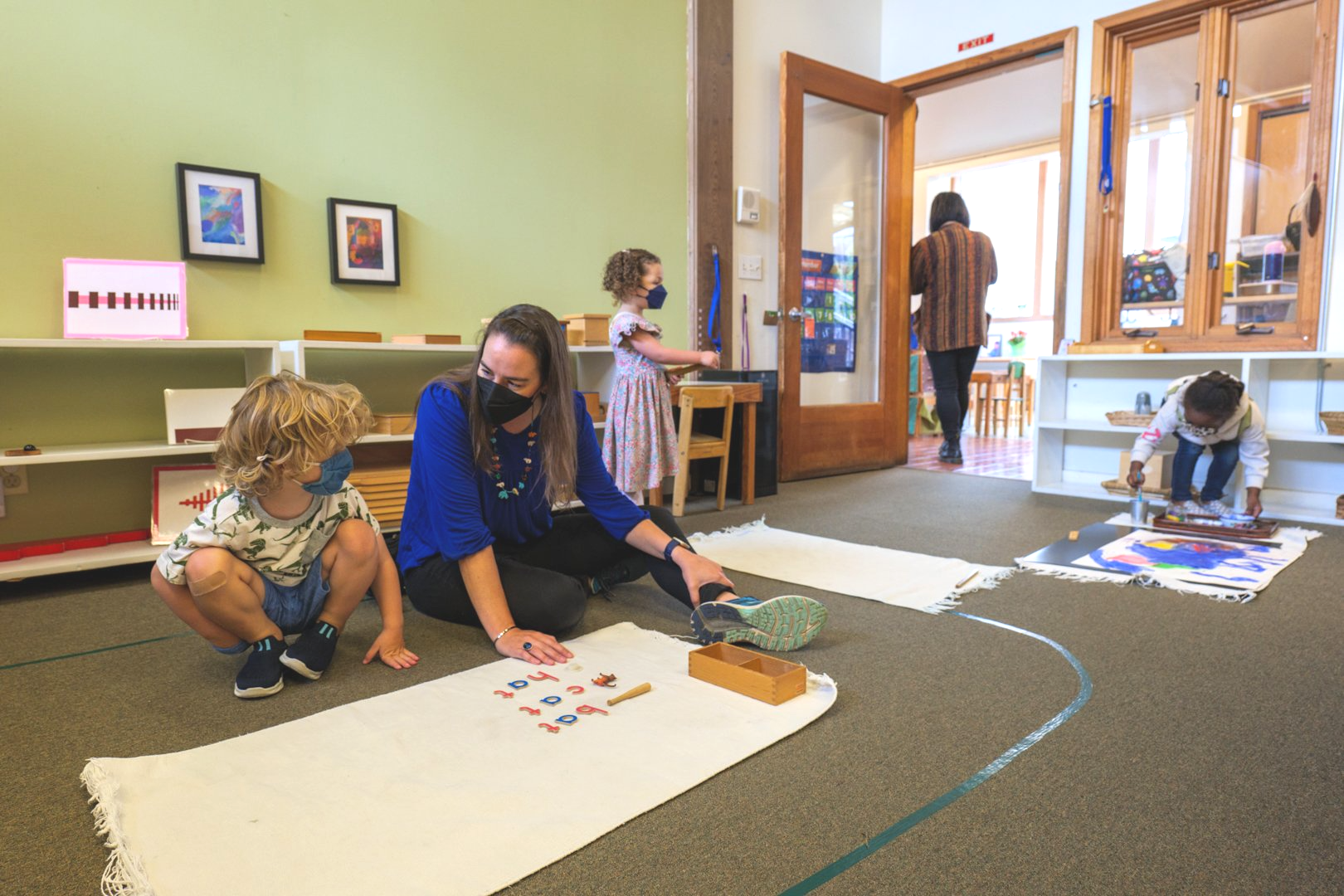
Children in the early childhood classroom are ready to explore written language and build oral skills. Starting with the sandpaper letters, children explore phonics, letter formation and writing mechanics. We then incorporate the moveable alphabet where children start forming words and sentences. Some children are ready to jump into reading well before Kindergarten, whereas other children will take more time. Our trained Montessori teachers will support each child’s pace of learning.
Math
The Montessori math materials were designed by Dr. Montessori herself. They include concrete manipulatives that provide a hands-on mathematical experience to help children understand concepts rather than memorizing facts. Young MFS students may work with numbers beyond 1000, use golden beads to learn place value, and begin to learn addition, subtraction, multiplication, division, and fractions.
Sensorial Studies
Sensorial materials are carefully designed to heighten, develop, and refine the senses of the child. The child studies and learns about the environment through the five senses: tactile, visual, auditory, olfactory, and gustatory. The materials teach the child to pay careful attention to the size, shape, weight, and texture of an object. Additionally, the sensorial materials are self-correcting which promotes independence of learning.
Research shows that both math and geometry rely on the exploration of the Sensorial materials, as children are exposed to shape, sequence, size, and general relationships.